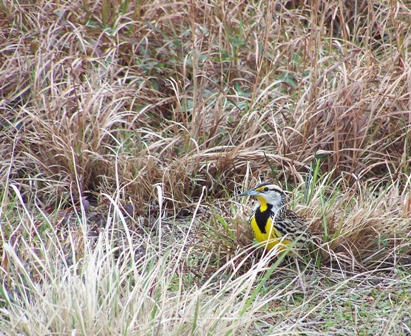
 Massachusetts is re-foresting in a major way. Lands cleared for agriculture just 100 years ago are now wooded once again. Many more acres are now successional i.e. that brushy, shrubby phase between meadow or field and forest.
That’s a good thing, right? Well, widescale changes like this can cause problems for birds reliant on specific habitat types. The statewide reforestation was never more apparent to birders in Massachusetts than when Mass Audubon released the 2011 State of the Birds Report.
It stated: “Breeding birds of forests and urban/suburban landscapes are prospering across the state. Conversely, birds of early-successional habitats (such as grasslands and shrublands) are, by and large, declining—some of them precipitously so.” In other words, as the woods expand and the fields vanish, woodpeckers are up, meadowlarks are down.
So, what can and should be done? Nobody in Massachusetts is prepared to clear forests to create grasslands, but the grasslands that are intact can be taken care of for the sake of their dependent birds, like upland sandpipers, grasshopper sparrows, bobolinks, and more.
Here’s a quick comparative study. During the first Breeding Bird Atlas project in the 1970s, “atlasers” (volunteer birders who gave their time over a five-year period to find the state’s nesters) found eastern meadowlarks in 44 percent of the state. During the second atlas, completed last year, eastern meadowlarks were found in just 10 percent of the state. The reason for the decline was obvious. Their habitat was disappearing.
Among its thousands of acres of protected lands, Mass Audubon owns several grasslands, including one at the Daniel Webster Wildlife Sanctuary in Marshfield. For the past several years, the staff at the sanctuary has been working hard at invasive plant species removal, eradicating brown knapweed that was choking the native grasses. The hope was that should the grasses be more natural, the fields would provide better nesting habitat for endemic birds.
In June of this year, the staff was rewarded when they noticed two eastern meadowlarks, at the height of breeding season, flying around a specific area. The following morning, while leading a bird walk, they noticed an adult bird carrying food to a spot in the grasses, a sure sign of breeding activity.
For longtime birders of Daniel Webster, the sight of meadowlarks in summer was a return to the way things used to be, decades ago. Hopefully the meadowlarks and their youngsters will survive their migrations and will find Daniel Webster again, so that past becomes part of the future.
It just goes to show: a little management can go a long way, especially when the life of one of earth’s creatures is at stake. Did you see any eastern meadowlarks this year? If so, tell us where and when in the comments.


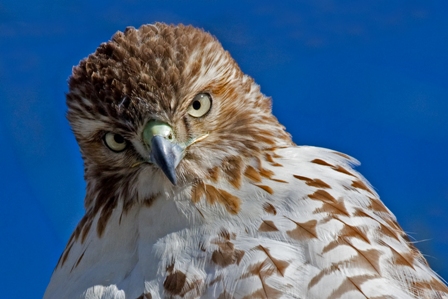 Although many birds migrate during the fall, hawks are especially impressive to watch. In fact, fall migration potentially offers the best opportunity to view a variety of hawk species in greater numbers than any other time of year as the birds make their way across the skies of Massachusetts on their way south for the winter.