

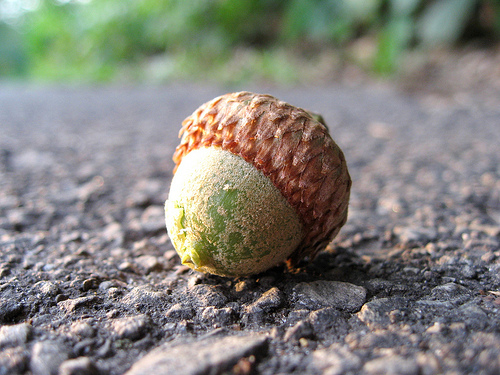
About Those Acorns

Photo credit: beautifulcataya via photopin cc

Fall is a time for nuts and no nut is more noticeable than the acorn, the fruit of oak trees and food of wildlife.

Some years are boom years for acorns. Hikers dodge falling acorns and balance on trails that seem to be covered in marbles.

Other years, we seem to have no nuts.

Why?

Like many trees, oaks have irregular cycles of boom and bust. Boom times, called “mast years,” occur every 2-5 years, with few acorns in between. But the why and how of these cycles are still one of the great mysteries of science.

Scientific research can tell us what a mast year is not. A mast year is not a predictor of a severe winter. Unfortunately, plants and animals are no better at predicting the future than we are.

Strangely, mast years are not simply resource-driven. Sure, a wet, cool spring can affect pollination and a hot, dry summer can affect acorn maturation. But annual rainfall and temperature fluctuations are much smaller in magnitude than acorn crop sizes. In other words, weather variables cannot account for the excessive, over-the-top, nutty production of acorns in a mast year.

So what does trigger a mast year? Scientists have proposed a range of explanations—from environmental triggers to chemical signaling to pollen availability—but our understanding is hazy and the fact is that we simply don’t know yet.

Boom and bust cycles of acorn production do have an evolutionary benefit for oak trees through “predator satiation.” The idea goes like this: in a mast year, predators (chipmunks, squirrels, turkeys, blue jays, deer, bear, etc.) can’t eat all the acorns, leaving some nuts for growing into future oak trees. Years of lean acorn production keep predator populations low, so there are fewer animals to eat all the seeds in a mast year. Ultimately, a higher proportion of nuts overall escape the jaws of hungry animals.

Whatever the reasons and mechanisms behind acorn cycles, mast years do have ecological consequences for years to come. More acorns, for example, may mean more deer and mice. Unhappily, more deer and mice may mean more ticks and, possibly, more incidences of Lyme disease.

Many animals depend upon the highly-nutritious acorn for survival. Oak trees, meanwhile, depend upon boom and bust cycles, and a few uneaten acorns, for theirs.

Amazing Acorn Facts

  • There are about 90 species of oaks in North America. All oaks have acorns.
  • There is no such thing as an Acorn Tree.
  • Acorns belonging to trees in the Red Oak group take two growing seasons to mature; acorns in the White Oak group mature in one season.
  • Oak trees have greenish, inconspicuous female flowers and are wind pollinated.
  • Oak trees of North American annually produce more nuts than all the region’s other nut trees together, wild and cultivated.
  • One huge oak can drop up to 10,000 acorns in a mast year!
  • Masting takes a lot of energy! Oak trees grow slowly in a mast year and grow well the year after.

Photo credit: beautifulcataya via photopin cc
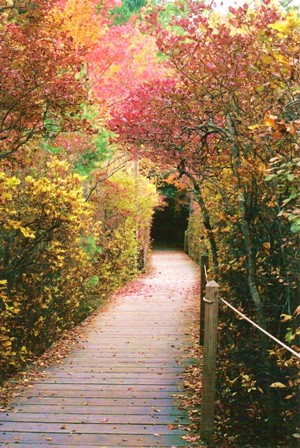
The Science Behind Foliage

By now, we’re well into foliage season, and many of us have likely done some leaf peeping, as it is shaping up to be a year of spectacular colors (see Foliage Forecast below for why). When you’re checking out nature’s painterly display, do you ever wonder why the leaves change color in the fall?

To get the answer, the first thing to know is that leaf color comes from three pigments:

  1. Chlorophyll. Needed by trees to convert sunlight into food (known as photosynthesis), chlorophyll also provides the green hue to leaves.
  2. Carotenoids. The same thing that gives bananas and sweet potatoes their yellow and orange hues makes leaves golden as well.
  3. Anthocyanins. This one is responsible for the vibrant red and purple tones in leaves as well as raspberries and eggplants.

Since daylight hours are longest during the summer, an abundance of light is available to trees. This means they’re performing photosynthesis optimally and ultimately, storing energy as carbohydrates. The result: lots of chlorophyll, and gorgeous, bright green leaves we see in the spring and summer.

Carotenoids are in leaves during the growing season as well, but we don’t get to see the colors until the fall since so much chlorophyll is present. The anthocyanins responsible for fall colors are produced in the leaves only in autumn.

As the nights begin to lengthen and our daylight hours decrease, trees begin to prepare for winter, and respond to decreasing sunlight by producing less chlorophyll, and eventually stop photosynthesis to lay dormant through the frozen season. As chlorophyll breaks down, carotenoids are able to show through, creating the vibrant display of yellows, oranges, and browns.

The visibility and brightness of the red hues you might see is determined by temperature, soil moisture, and direct sunlight. During warm, sunny fall days, leaves produce lots of glucose, or sugar, but the cool evening temperatures cause gradual closing of the veins in the leaf. This keeps the sugar sap from running down into the tree branches and trunk. More light means more sugar, and the combination of these things spurs the production of anthocyanins in certain trees like maples, which show gorgeous reds, purples, and crimson.

Foliage Forecast

The most stunning and varied-hue foliage displays come from a warm, wet spring season, a summer season that is not too hot or dry, and an autumn with warm, sunny days and crisp nights. This year, we have been experiencing exactly that weather pattern, and are predicted to be in for an absolutely gorgeous transition into winter, unless we experience some warmer and wetter than normal weather right about now.

Tree Color Guide

Different trees yield different leaf colors. Here’s a short list of what you might see when you’re leaf peeping:

  • Birch – golden yellow
  • Dogwood – bright red
  • Oaks – russet & red
  • Sugar maple – vermilion or orange
  • Red maple – deep red to nearly purple

If you’d like to learn more, please join us on an upcoming fall foliage program. Happy leaf peeping!

Photo © Nicole Lemay Text by Emma Evans