

Saving Stranded Sea Turtles

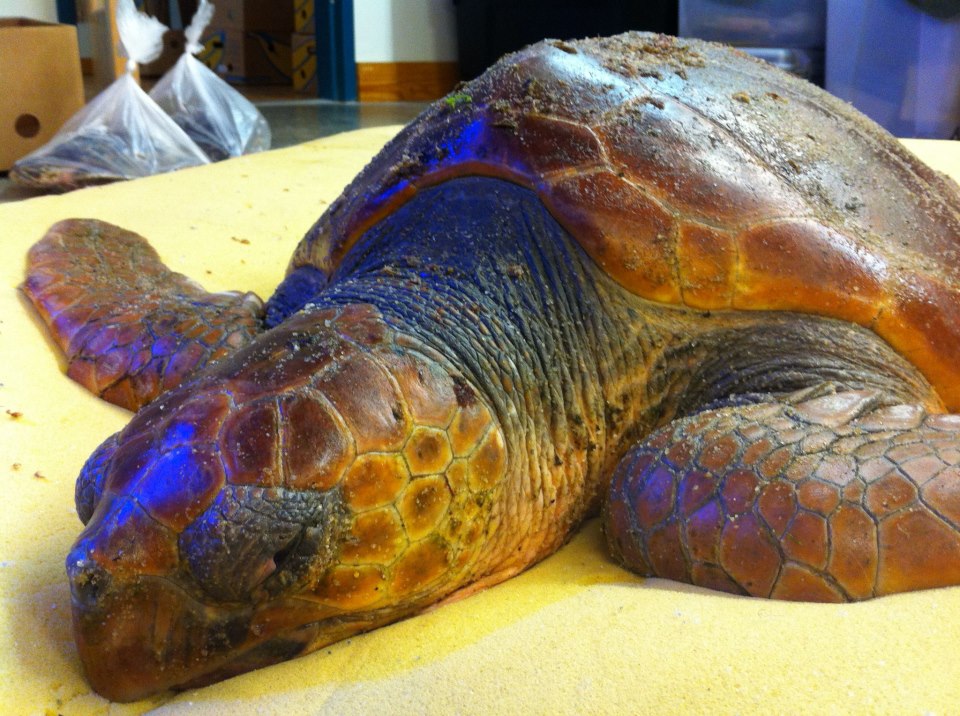
Sea TurtleMolly Shuman-Goodier of Wellfleet Bay Wildlife Sanctuary reports on this year’s sea turtle stranding season.

Every year come fall, the lower air and water temperatures lead to the stranding of many “cold-stunned” sea turtles on Cape Cod.

Strandings are not a new phenomenon: plenty of fish, turtles, and birds wash up each year. Yet, sea turtles are of particular interest because they are endangered, and we owe them a little help.

Why They Get Stranded

The kemps ridley, loggerhead, and green sea turtle juveniles that cold stun on the Cape are ectothermic organisms, meaning they cannot regulate their body temperatures. This means that the turtles unfortunate enough to swim into Cape Cod Bay get stuck as the water (and their body) temperature cools.

Unable to swim actively, the winter temperatures render the turtles helpless against the strong winds and tides. They wash up on bayside beaches were Mass Audubon staff and dedicated volunteers patrol tirelessly after high tides to locate turtles. Once found, the turtles are then sent to the New England Aquarium for rehab.

The Season So Far

After a record high of 198 total sea turtle sightings this summer, we knew 2012 would be a busy cold stun season. Volunteers and staff at Wellfleet Bay Wildlife Sanctuary worked around the clock during the busy period from November 22 to December 1, recovering over 150 turtles in 11 days, some weighing up to 100 pounds.

As December 13, 253 turtles have washed up cold-stunned, making this year the 2nd highest stranding year out of over 30 years on record. What makes this year especially significant is that 173 turtles have been encountered alive, meaning recovery rates at the aquarium will be higher than ever.

That said, there are still a couple more weeks left in the season, so we’d best get back out on the beaches!

Learn more about sea turtle strandings from Wellfleet Bay and what happens to the turtles once they’ve been rescued.
What Happened to the American Chestnut?

Once upon a time, the American chestnut was king.

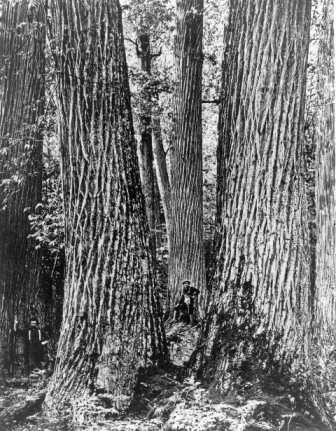
Some 100 years ago, this tree dominated the eastern forest from Maine to Georgia. It was the most numerous tree in the forest (one of every four hardwood trees was a chestnut). It was the biggest tree, sporting massive trunks up to 10 feet in diameter and reaching 100 feet high. And it was the most important tree, supporting every material need of humans and wildlife.

“At last when the tree can serve us no longer in any other way it forms the basic wood onto which oak and other woods are veneered to make our coffins,” said forester, P.L. Buttrick, in 1915 (Mighty Giants, p.67).

The American chestnut exemplified the cradle-to-grave concept, literally. So what makes this tree so useful?

  • Its wood—strong, straight, and resistant to decay—was used to build everything from homes to furniture to fences, railroad ties, and barrels.
  • Its tannin was extracted and used in the manufacture of leather and the dying of silk.
  • Its blossoms, beloved by bees, produced the sweetest honey.
  • Its highly nutritious and abundant nuts provided food for wildlife and people. Squirrels, bear, turkeys, and deer relied on nuts for food, and rural economies depended upon the nuts for fattening pigs, feeding families, and earning cash.

Blighted by Blight
Then one of the greatest natural disasters in forest history struck. In 1904, a devastating fungus was discovered on chestnut trees in New York’s Bronx Zoo. Within a few decades, the chestnut blight had killed over 4 billion chestnut trees on more than 200 million acres in eastern North America.

Today, you can still find chestnut trees in your local woods, but they are usually stumpy sprouts that rarely reach more than 10-20 feet high before succumbing to the blight. The roots of the tree continue to live and send out sprouts, but the tree will never grow tall and majestic like its ancestors.

A Path Forward
Thankfully, there is hope for the American chestnut. Last spring, Mass Audubon’s Wachusett Meadow Wildlife Sanctuary became a demonstration site for The American Chestnut Foundation’s (TACF) efforts to restore the American chestnut tree to our eastern woodlands.

By backcrossing the American chestnut with Asian chestnuts (which are naturally immune to the blight), the goal is to create an American chestnut that is blight-resistant but almost completely American, with all the strong qualities of the majestic trees of a century ago.

Wachusett Meadow’s demonstration orchard hosts five young seedlings, several generations into the breeding program. These five seedlings may not hold the key to the future in their DNA, but their presence will raise public awareness about the American chestnut and restoration efforts. Come see for yourself: An interpretative sign at the start of the South Meadow Trail points the way!

Want to learn more about the American chestnut?

Photo: American chestnut circa 1910 Courtesy of the Forest History Society