
 With the hard work of raising young behind them, many birds shed their tired, worn-out feathers (a process called molting) in winter and replace them with new ones. But not all birds make a simple one-for-one swap.
Some species turn dull, while others nearly completely flip their plumages. Here are a few to keep an eye out for:
American Goldfinch
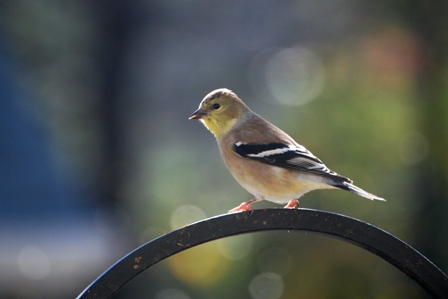
Adult male goldfinches in breeding plumage might be described as the color of a ripe lemon, and as they are among the latest nesters in our state, we get to enjoy it all summer long. When they turn, they go from lemon to olive shades, retaining some yellow around the face to remind us just who they are. Sibley Guides offers an excellent illustration of this transformation.
Common and Red-throated Loons
Had the latter been named by a Massachusetts ornithologist, it would have carried a much more boring name. We don’t get the pleasure of seeing the red throats; instead we see gray. With common loons, we watch the change from sharply-defined black and white features on the head and back to thoroughly drab plumage making them easily confused with “red throats.”
Black Guillemot
Even with a good bird guide, one has to step back from the scope and consider the date. If it’s December in Massachusetts, look for an all-white bird with black markings. If it’s July in Maine, keep an eye out for an all-black bird with a white wing patch.
Dunlin
We only have a handful of nesting shorebirds in Massachusetts. Many more pass through on the way to the Arctic in the spring and summer. When we get them on the way back, many of them retain their breeding plumage for a while, some even losing it altogether. For instance, we can see dunlins with their black breeding patches on their bellies, before they fade for the winter.
Learn more about birds in winter by joining us for an upcoming bird walk.
Photo of American Goldfinch in winter via Valerie Reneé/flickr