

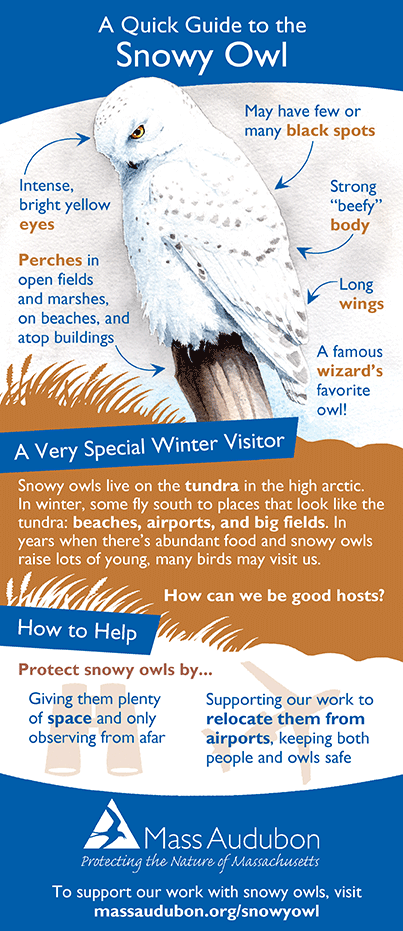
 In case you haven’t heard, this is the winter of snowy owls. And no one knows this better than Norman Smith, snowy owl expert and sanctuary directory of Mass Audubon’s Blue Hills Trailside Museum in Milton.
For more than 30 years, Smith has been trapping snowy owls at Boston’s Logan Airport and relocating them to a safer, more hospitable environment. Read more about why snowy owls love airports.
Before Smith releases the owls, he attaches a tiny tracking transmitter. These transmitters send data such as location, temperature, and altitude, enabling researchers to learn more snowy owl behavior.
2014 Stats
The first snowy owl sighting in Massachusetts this season was on November 17, 2013. Since then, Smith has captured and relocated 87 snowy owls (70 of those from Logan). Compare that to the 8 he captured last year and a total of 53 during the 2011-2012 winter.
The numbers will only grow as snowy owls usually stick around until early April. Some have been known to linger; the latest date recorded was July 7.
Get Involved
Want to be a part of the snowy owl action this season? Here’s how you can help:
- Spread the word by sharing our Quick Guide to Snowy Owls infographic.
- Contribute vital support to help Smith continue his great work.
- Learn more about snowy owls and Mass Audubon’s Snowy Owl Project.
- Keep your distance if you see a snowy owl so as to not disturb their normal behavior.
- Report your sighting on eBird.
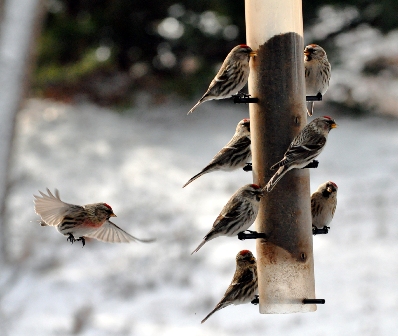 Calling all backyard bird watchers! Our annual winter bird count,