
A Mosquito Repelling Garden?

If you have ever been to Felix Neck Wildlife Sanctuary on Martha’s Vineyard during the summer, there’s a good chance you had an encounter with a mosquito, or 1,000. Turns out, these pesky insects love the wildlife sanctuary just as much as we do.

It’s one thing to have them on the trails, but each season they take over the Nature Center, where we host programs for kids and adults of all ages. The mosquitoes lurk in the tall grass that surrounds the front of the center, just waiting for the door to open so they can make their grand entrance.

Enough was enough, and the team at Felix Neck, led by sanctuary director Suzan Bellincampi, decided to do something about it. First step: remove the unruly grass and replace it with gravel all around the building. Then Sue, a long-time volunteer and garden maven, suggested installing an anti-mosquito, or mosquito-repellent, garden. Or, as we like to call it, a “scented garden.”

The Makings of Scented aka Mosquito Garden

Scientifically, we know that mosquitoes are attracted to the carbon dioxide we breathe out. So unless we stop exhaling, mosquitoes will keep on coming. We also know that, in an effort to create a more “natural” mosquito repellent, many manufacturers have turned to nature’s bounty for scents that have been suggested to ward of these little buggers.

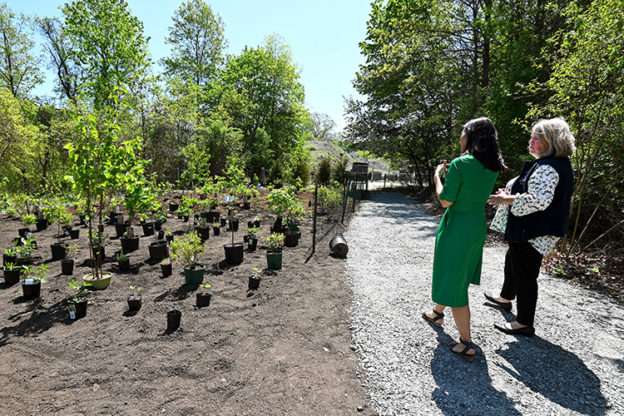
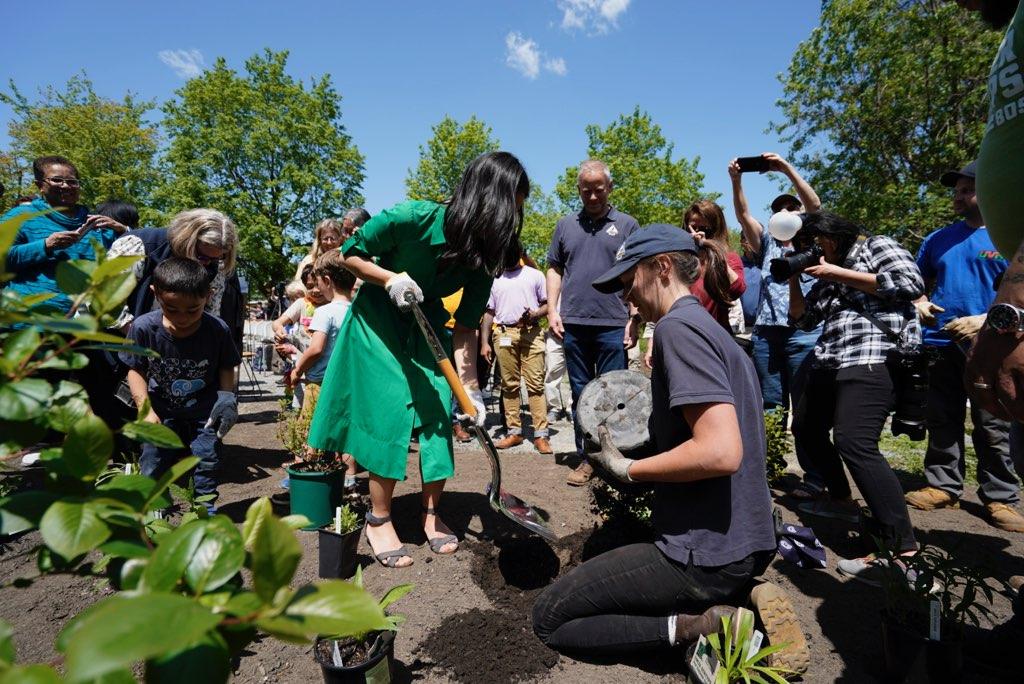
Taking a cue from Mother Nature herself, we decided to go right to the plant source that provides repellent properties to all those off-the-shelf products. Our volunteer built some raised beds and installed plants that are believed to have anti-mosquito properties. In our scented garden you will find:

  • Lemon Balm
  • Eucalyptus
  • Marigold
  • Garlic
  • Lemon Verbena
  • Basil
  • Sage
  • Scented Geranium
  • Nasturtium
  • Catmint nepeta
  • Sweet Annie
  • Lemongrass
  • Rosemary
  • Fennel

The season has just begun, but we have already noticed a decrease in the number of mosquitoes indoors. Is it because of the garden? Or was removing the grass enough to do the trick? There’s still much to learn and observe before we can deem the experiment a success.

Regardless of whether or not it really repels mosquitoes, we now have a lovely, scented garden that visitor can see, smell, and touch. Seems like a win-win situation to us!

Posted in Gardening | 3 Comments

Weekend Update

Looks like the rain will clear, just in time for the weekend! And what a weekend it will be. We’ve got so many great programs planned, including several to enjoy with Dad. Please note: Drumlin Farm’s Strawberry Day has been postponed. The new date is Saturday, June 22.

  • Celebrate Father’s Day early with a Father’s Day Weekend Canoe & Breakfast on Saturday at Broadmoor in Natick. Watch the morning mist rise off the river then enjoy a hearty breakfast served on the banks of the river. (registration required)
  • On Sunday afternoon, take a relaxing Father’s Day Paddle at Arcadia in Northampton & Easthampton. Learn about the resident plants and animals that you can observe while paddling this quiet stretch of water. (registration required)
  • Take a Father’s Day Hike at Wachusett Meadow to the summit of Brown Hill, looking for red-tailed hawks patrolling the meadows along the way. (registration required)
  • During Dad and Me, spend some quality family time while discovering Moose Hill in Sharon. You’ll be given a series of clues that will send you to various places and habitats within the sanctuary, and continue until you come to your family’s prize package.
  • Join Joppa Flats for Father’s Day Tide Pool Cruise along the lower Merrimack River. We’ll look for seabirds, seals, and waterfowl and learn about this vital part of the area’s natural history. (registration required by 4 pm on Saturday)
  • Learn to bird by ear with Pleasant Valley in Lenox during Chirps, Cheeps, and Warbles. This bird walk is designed for beginner and intermediate birders working to improve their auditory identification skills.
  • Go on an 5.5 mile Appalachian Trail Adventure Hike with Connecticut River Valley Sanctuaries. Along the way, we’ll discover many natural wonders of Mount Greylock’s dynamic forests, its glacial erratic “boulder-trains,” and gorgeous tumbling mountain brooks. (registration required)
  • Find out what varieties of native plants will attract butterflies to your own yard during Butterfly Gardening 101 at Boston Nature Center. (registration requested)

For a full listing of programs, visit our online program catalog, where you can now register online for many of our programs. 

Photo © Lauren Kreyling

Posted in Get Outdoors | Leave a comment

We Heart Native Plants

There are many reasons you should include native plants into your landscape plans. For one, most native plants require little maintenance because they have evolved to thrive in our local habitats and growing conditions.

That means after the first year of making sure they are well watered and have put out roots, very little watering and care is needed. Perhaps the most compelling reason is that not only do native plants look good, they also do good for wildlife.

Five Native Plants To Consider

So what native plants should you consider if you live in Massachusetts? Here are five of our spring and summer perennial favorites that will come back year after year.

Butterfly Weed (Asclepias tuberosa)
Similar to its cousin, the dusty pink-flowered common milkweed (Asclepias syriaca), butterfly weed is a host plant for monarch butterfly caterpillars. A host plant is a specific plant that a species of caterpillar will eat.  Butterfly weed requires full sun and can grow as tall as one to two feet, with orange or yellow flowers that bloom in summer.

Joe-Pye Weed (Eutrochium maculatum)
Don’t let the “weed” in joe-pye weed fool you. The term in this case refers to the fact that it’s commonly found, not that it’s unwanted.  The dusty pink late-blooming flower attracts pollinators and clouds of butterflies in the late summer. The Gateway variety will grow to six or seven feet tall, where as Little Joe reaches only three to four feet.

Foam Flower (Tiarella cordifolia)
Attracting small bees and butterflies, this little bottle-brush of a white flower is held above a nicely toothed leaf. There are many new varieties of foam flower that have interesting red markings on the leaves. It can spread and become a beautiful spring flowering ground cover.

Columbine (Aquilegia canadensis)
The native columbine has an orange-red flower with a yellow center and is attractive to pollinators and hummingbirds. After blooming, the delicate blue-green foliage continues to look beautiful all summer long. And while there are many attractive species of columbines, the only one native to Massachusetts is the Aquilegia canadensis.

Maidenhair Fern (Adiantum penduatum)
This native is one of the most delicate-looking ferns. Its thin black stems and bright green foliage add a light frothy texture to a shady garden.

Many local nurseries sell native plants. Before you purchase one, make sure they were cultivated from seed. We like the wild plants to stay wild!

Do you have a favorite native plant? If so, share in the comments!

Posted in Gardening | 8 Comments

What to Do if You Find a Baby Bird

If there’s one question people ask us the most this time of year, it’s some variation of “I found a baby bird—what should I do?”

And we get it. When you come across a helpless-looking baby bird out of its nest, it’s hard to resist the overpowering urge to come to the rescue. But if you really want to do your part, it’s usually best to leave it be. How do you know when to take action and when not to? For that, you need to know the growth stages that many baby birds pass through.

The Stages
This time of year, a baby bird falls into one of three categories:

  • Hatchling. It hasn’t yet opened its eyes, and may have wisps of down on its body. It’s definitely not ready to leave the nest.
  • Nestling. It’s older than a hatchling. Its eyes are open, and its wing feathers may look like tubes because they’ve yet to break through their protective sheaths. Nestlings are also not ready to leave the nest.
  • Fledgling. Young bird that is fully feathered. Its wings and tail may be short, and it may not be a great flyer, but it can walk, hop, or flutter. It has left the nest, though its parents may be nearby.

Helping Hatchlings and Nestlings
If you find a hatchling or a nestling on the ground and you can see its nest, you should try to safely return it. Contrary to popular belief, the parents will not abandon a young bird that smells like people. If there’s no nest, you can make one by fastening a wicker basket to a branch. Check out our article for instructions.

It’s never a good idea to bring a baby bird home and try to raise it. In fact, federal law prohibits anyone from having wild birds in their possession. Law aside, a baby bird, cared for by untrained people, once released, most likely won’t survive as well in the wild. It has missed key lessons from its avian family, like how to locate food and avoid predators.

Giving Fledglings Room to Grow
For fledgling encounters, the best course of action is to leave it be. There’s only one exception: if it’s obviously injured.

As awkward as a fledgling bird may look, this is natural stage, and the parents are most likely nearby, hunting for food and keeping watch. If the bird’s in immediate danger, you can put it in a nearby bush or tree.

When in doubt, contact a licensed wildlife rehabilitator. For more information on baby birds out of their nests, check out our Living with Wildlife article.

Photo via b0jangles/flickr

Posted in Nature Notes | Tagged , , | 4 Comments

Weekend Update

CowBeavers and fireflies and birds, oh my! This weekend is chock-full of great programs about wildlife. Plus, two festivals are sure to entertain the entire family!

  • Dairy Day takes place at Drumlin Farm this Saturday, rain or shine. Expect ice cream making, milking demonstrations, & more. Plus there will be food trucks selling dairy themed goodies and local farmers selling dairy products! Get your tickets before 4:30 pm Friday and save on admission. (tickets required)
  • Beaver created wetlands are always interesting habitats to explore. Bring your family for a Beaver Hike to discover the lodges and dams of the beaver families at Wachusett Meadow in Princeton, as well as signs of other wildlife that find homes in beaver ponds. (registration required)
  • During Secret Lives of Fireflies at the Blue Hills Trailside Museum in Milton, learn about these magical insects and an important citizen science project before taking a guided night-walk to look for fireflies. (registration required)
  • Family Fun Day at Pleasant Valley in Lenox is a time for fun and learning for the whole family. There will be live animal demonstrations, talks, guided walks, hands-on craft activities, food, and more—all with a nature theme.
  • Join Broadmoor in Natick for a Spring Birding Exploration. We’ll explore the habitats at the wildlife sanctuary, watching for spring migrants and other birds. (registration required)
  • View the night sky through their big telescopes during Sunday night’s Free Star Party at Moose Hill in Sharon. The event is on-going, so drop in for the entire time, or just some of the evening.

For a full listing of programs, visit our online program catalog, where you can now register online for many of our programs.

Posted in Get Outdoors | Leave a comment

The Story Behind Bee Swarms

You may have seen the photo of a swarm of honey bees on a car in Dorchester back in early May and wondered what was going on. The short story: the bees were looking for a new home.

But why did they need a new home and what should you do if you are lucky enough to observe a swarm? Matthew Smith, Mass Audubon’s Web Developer and hobby beekeeper, explains.

Why Bees Swarm
Honey bee swarms are a natural part of spring. Honey bee colonies that survive the winter begin to lay eggs and expand their colonies in early spring. By May, a strong hive could be overflowing with bees with hundreds more hatching each day.

At the same time, just-bloomed flowers provide bees with nectar and pollen, which is collected and brought back to the hive. It doesn’t take long for a productive colony to outgrow its hive.

Bees start swarm preparations by starting to raise a few new queens. When the first of the new queens is about to emerge from her cell, the bees fill their stomachs with honey from the hive. The old queen and about half the bees fly out of the hive in what looks like a chaotic tornado of bees. The queen lands, usually in a tree, and the rest of the bees cluster quietly around her.

There they remain, usually in a volleyball-sized cluster, for a day or two while scout bees go out and look for new digs. The bees left in the hive will hatch a new queen and continue at the old location. If the swarm finds a new home safely, the colony has successfully split in two.

You See a Swarm, Now What?
Bees in a swarm are usually docile, if left undisturbed. In general, you can observe them from a good distance remaining very quiet. If a swarm is in the way, like it was in Dorchester, it’s usually easy to find a beekeeper willing to come and get them. Beekeepers can give the bees a home and start a new colony with the swarm. The Massachusetts Beekeepers Association maintains a list of local bee clubs.

Learn More About Bees
Several Mass Audubon wildlife sanctuaries have observation hives during the warm months including Blue Hills Trailside Museum in Milton, Long Pasture in Barnstable, and Stony Brook in Norfolk. Call in advance to ensure the hives are on display.

On Friday, June 21, Boston Nature Center in Mattapan is hosting a free screening of the documentary Queen of the Sun: What are the Bees Telling Us?,  which takes an in-depth look at the global bee crisis.

Beyond Mass Audubon, this Sunday marks the 3rd annual Tour de Hives, a day-long adventure where you visit different hives around Boston by bike.

Have you even seen a bee swarm? If so, tell us about it in the comments!

Posted in Nature Notes | Leave a comment

Weekend Update

KayakDon’t let the heat keep you indoors! Instead, join us for a fun outdoor adventure. Just be sure to bring along plenty of water!

  • Be the first to greet Drumlin Farm’s animals in the morning during Saturday’s family-friendly Morning Chores. We’ll do some mucking and feeding, and check in the chicken house for the first eggs of the day. After we’re finished with our work, we’ll enjoy a hearty farm breakfast. (registration required)
  • During Kayaking Sampsons Island, sanctuary director Ian Ives will guide you around Cotuit Bay, North Bay, and West Bay, all the while sharing information on bird life and the natural history of the harbor. (registration required)
  • Interested in photography? Broadmoor in Natick is running two photo-centric Saturday programs: 10 Great Tips for Spring and Summer Nature Photography and Focus on Macro Photography Workshop. You might even capture the winning shot for the Mass Audubon Photo Contest! (registration required)
  • Take a five-mile round-trip hike in Mount Washington State Forest to the rocky, open summit of Alander Mountain as part of the Berkshires Summit Hike Series. This is a moderately strenuous hike with an elevation gain of 840 feet. (registration required)
  • Ipswich River’s annual Audubon Nature Festival takes place on Sunday in Topsfield. Come see live owls up close, crawl inside our demonstration beaver lodge, take a naturalist-guided walk, and much more.
  • Pick up a large variety of native, perennial wildflowers and a selection of shrubs, ferns, and groundcover at Moose Hill in Sharon during their Native Plant Sale on Saturday and Sunday. Sunday also marks the Native Plant Sale and Spring Open House at North River in Marshfield.

For a full listing of programs, visit our online program catalog, where you can now register online for many of our programs.

Posted in Get Outdoors | Leave a comment

The Plight of the Swallows

Every spring and summer, swallows grace our skies with their aerial acrobatics, diving to catch insects in mid-flight. Yet, Mass Audubon’s 2011 State of the Birds report had troubling news: cliff swallows are rapidly declining and in need of urgent conservation action while barn swallows are showing the initial signs of wide-ranging decline.

The reasons for these declines are currently unknown (though we have our suspicions). One thing is clear: we need to unravel the mystery to help these agile birds, and fast! That’s where you come in.

How You Can Help
Here’s what we know about the swallow situation:

  • Barn swallows and cliff swallows rely on man-made structures to place their nests. Barns, bridges, and overpasses are all likely spots.
  • Many of these locations are disappearing from the Massachusetts landscape.
  • The ones that are still standing are also favored by the house sparrow, a non-native, aggressive bird that readily kick swallows out of their nests and destroys colonies.

In order to figure out how these factors are at play, as well as other issues like climate change and toxic chemicals, we need to learn more about how swallows are making their living in Massachusetts. Enter the Big Barn Study.

From now until July 8, we’re asking willing volunteers to visit at least one potential barn swallow or cliff swallow nesting location three times (see criteria). You don’t need to know in advance if barn swallows or cliff swallows are present (in fact, it is better that you don’t). Then report what you find (or don’t find). It’s as easy as that.

Learn more about the project, including how to identify barn swallows and cliff swallows as well as house sparrows, at our Big Barn Study site. Thank you in advance for helping to keep our skies full of dancing, bug-eating swallows.

Photo, barn swallows © Richard Johnson

Posted in Get Involved | Tagged , , | Leave a comment

What’s Growing on That Red Cedar?

Perhaps the strangest things that you might see each spring are the bright orange globs hanging in the eastern red cedar trees. They look a bit like orange marmalade being pushed through a garlic press. Moist to the touch and about the size of a golf ball, these ornaments adorning the cedars are actually fungi.

The life cycle of the cedar-apple rust fungus (Gymnosporangium juniperi-virginianae) depends on both apple and eastern red cedar hosts. It’s possible to find cedar-apple rust anywhere east of the Rocky Mountains where eastern red cedars and apples coexist.

For most of the year cedar-apple rust is hard to see. However, when spring rains moisten the hard brown kidney-shaped galls that over winter on cedar trees they develop bright orange spore horns. These are very conspicuous and make the cedar look like it’s fruiting. The spores are then blown, sometimes several miles, onto apple trees infecting young buds and leaves. Over the course of the summer the fungus matures and eventually spores are blown back to the cedar trees to overwinter as small galls.

The fungus does not permanently harm the eastern red cedar trees. However, if left untreated, cedar-apple rust will damage apple fruits to the point of making them unsellable. This is a major concern for orchard owners. Today, fungicide is used to prevent cedar-apple rust from destroying crops, but that wasn’t always the case.

In 1914, apple growers wrote the Cedar Rust Act of Virginia allowing them to destroy cedar trees on neighboring property in an effort to control the fungus. While most people enjoy eating apples, a lot of people also like eastern red cedar trees, especially if they’re on your own property. You can imagine how people reacted when they woke up to see their neighbors cutting down all their cedar trees.

This all came to a head in a classic 1928 court case where a judge determined that apple trees were more valuable than cedars, and therefore more worthy of protecting. Cedar tree owners would not be compensated for their losses, but would be allowed to keep the wood from the cut trees. Remember to thank those folks who lost all their cedars next time you bite into a delicious apple!

If you happen to be out on the next rainy day, try to find an eastern red cedar. Hopefully you’ll have a new appreciation for those bright orange galls and their complex history.

Have you seen cedar-apple rust fungus before? Tell us where and when in the comments!

Posted in Nature Notes | Tagged | 1 Comment

Weekend Update

The long weekend weather forecast is not what we were hoping for. But just in case things take a turn for the better, here a few ways to enjoy the outdoors.

  • In honor of World Turtle Day (which was yesterday), several of our wildlife sanctuaries are hosting turtle-related programs including Turtle Day at Laughing Brook in Hampden (update: this was cancelled due to weather), Turtle Festival Saturday and Sunday at Wellfleet Bay (will take place rain or shine), and Turtle Time at Ipswich River in Topsfield. (registration may be required)
  • Explore the birding hotspots of the Newburyport/Plum Island area with guides from the Joppa Flats Education Center, part of their weekly Saturday Morning Birding program.
  • Go on a family-friendly Owl Prowl at Wachusett Meadow in Princeton on Saturday. We’ll start by reading Owl Moon by Jane Yolen, before heading outside in search of owls. (registration required)
  • On Monday, enjoy a free Beach Ramble with Allens Pond in South Dartmouth. As part of this family-friendly program, we’ll meander through grassland meadow before walking by the salt pond onto a sandy beach. (registration required)
  • Cloudy days are often the best time to try out new binoculars and see how they measure up. Stop by the Audubon Shop at Drumlin Farm for a wide selection and expert advice.

For a full listing of programs, visit our online program catalog, where you can now register online for many of our programs.

Posted in Get Outdoors | Leave a comment