

 If a gardening catalog offered a plant that sported unique flowers, attracted butterflies, fed and protected the beloved monarch butterfly, provided nesting material for goldfinches and orioles, was easy to grow, and was native to our state, wouldn’t we be eager to plant some in our gardens?
So, what is this magical plant? Milkweed! There are over 70 species of milkweed native to the United States. In Massachusetts, species you may see include: common milkweed, swamp milkweed, butterflyweed, whorled milkweed, and poke milkweed. Each looks different and each blooms at different times depending on the species and location.
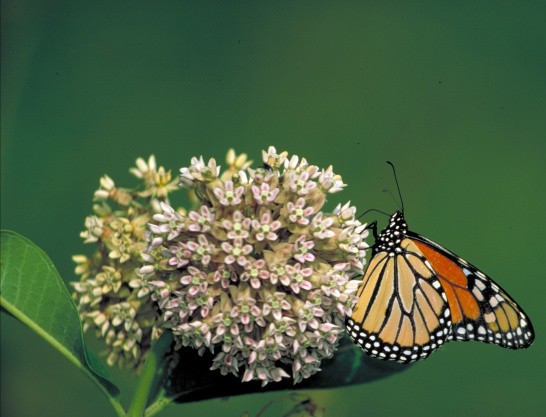
Common milkweed is probably our most recognizable milkweed. Found in fields, meadows, disturbed areas, and roadsides, its large, thick leaves exude a milky substance when broken; its pink blossoms attract a frenzy of insect activity in early summer; and its distinctive seed pods release a hundred or more seeds flying on silky parachutes in late summer and early fall.
But don’t let the “weed” part fool you. This plant is a treasure not to be plucked. Here are a few reasons why:
- Milkweed provides plentiful nectar to honey bees, bumble bees, wasps, butterflies, moths, and other native pollinators. Milkweed depends on insects for pollination and in return the insects receive easy nectar from milkweed’s many small flowers growing in large clusters.
- Monarch butterflies depend on milkweed for their survival. Monarch caterpillars only feed on milkweed and the toxins in the plant make the caterpillar and adult unpalatable and poisonous to vertebrate predators. The monarch’s bright orange color acts like a warning sign to predators: Eat me and you’ll get sick!
- Milkweed provides habitat for tiny aphids “herded” for their honeydew by ants; milkweed bugs who feed exclusively on milkweed seeds; crab spiders who assume the color of the milkweed flower and jump out at unsuspecting butterflies; and many more bizarre and wonderful creatures.
- Milkweed has an interesting history. In the genus Asclepias, milkweed is named after the Greek god of medicine (Asklepios) and the plant has been used medicinally for ailments ranging from asthma to tapeworm. (Not recommended!) Early settlers and pioneers used milkweed’s seed silk as stuffing for pillows and mattresses and ate every part of the plant after boiling in several changes of water to dispel the bitter toxins. (Again, not recommended!)
So, please, don’t weed the milkweed! Instead plant it, grow it, nurture it, and acquaint yourself with a patch near you.
To learn more about milkweed, visit a Mass Audubon wildlife sanctuary near you or come to the Annual Barbara J. Walker Butterfly Festival at Broad Meadow Brook in August to purchase milkweed, plant milkweed seeds, and learn more about butterfly gardening.
Photo of a monarch on common milkweed via U.S. Fish and Wildlife Service