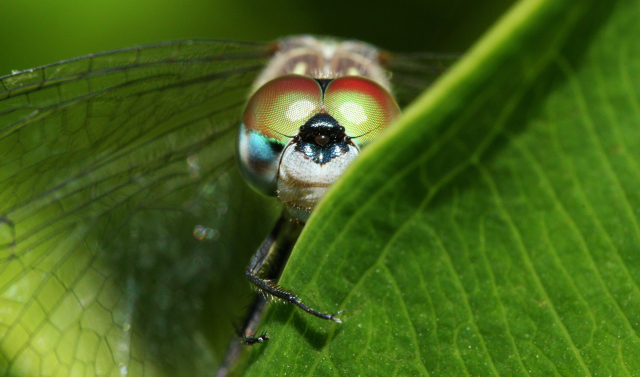

Mushrooms, the fruiting bodies of fungi, are especially abundant as the summer winds down and the cold air sets in.
Although some of our local fungi, such as oyster mushrooms, may be more familiar, they’re only a small part of a remarkably diverse world that includes glow-in-the-dark, multicolored, and gargantuan species.
Here are five amazing mushrooms to look for.
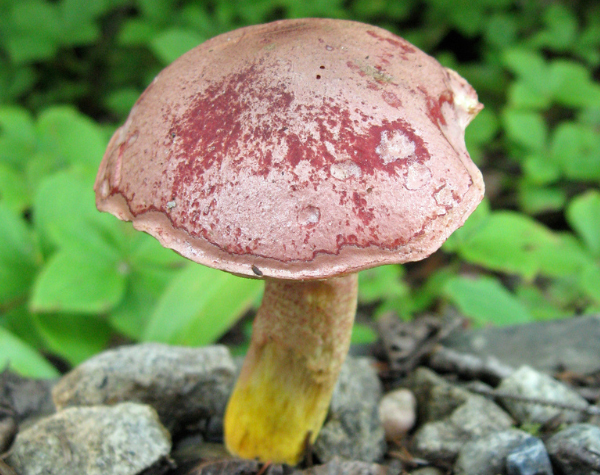
Chrome-footed bolete
Harrya chromapes
This two-toned mushroom looks like it’s lit from below. Although many of us think of “chrome” as a silvery coating on metals, painters used to use a pigment called chrome yellow that was made from lead and chromium (it’s no longer in use because it’s toxic). You’ll find this mushroom growing on the forest floor.
Luminescent panellus
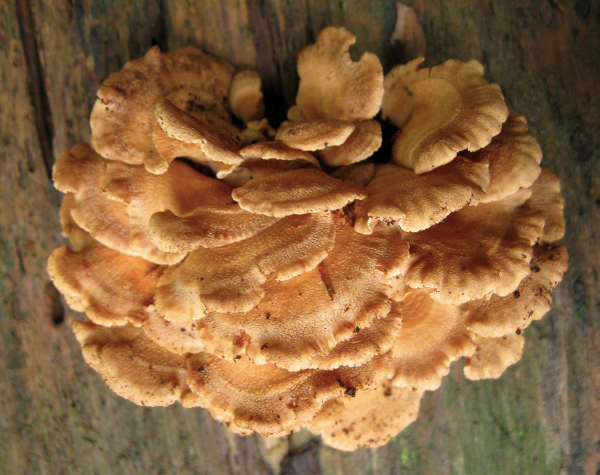
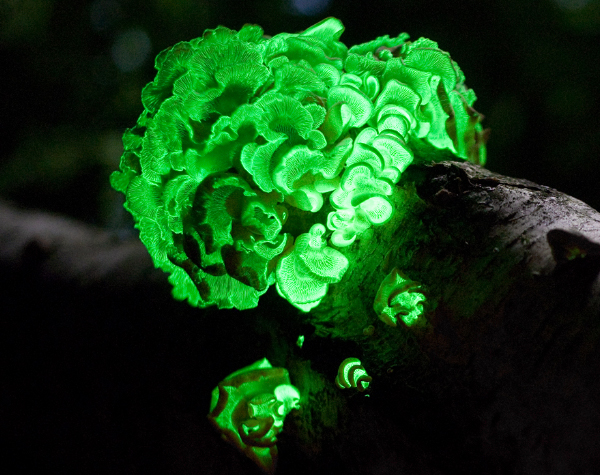
Panellus stipticus
Though it isn’t remarkable-looking during the daytime, it glows green in the dark (see second photo, which was exposed for a long period to gather more light). The purpose of this luminescence is unknown. Not all specimens glow, and the amount of glow seems to vary by location. Look for it on logs and sometimes in the wounds of hardwood trees such as birch, oak, and maple.
Ylem, Wikimedia Commons
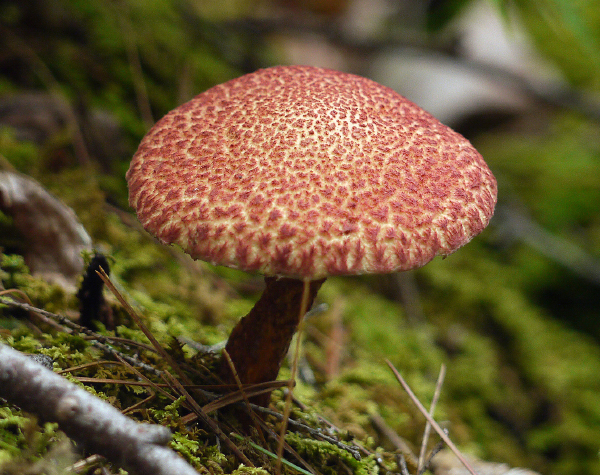
Painted suillus
Suillus spraguei
The painted suillus looks like a pointillist artist carefully covered it in fine red dots. As with most fungi, the mushroom part is just the tip of the iceberg—a network of fungal threads spread through the soil below, intertwining with the roots of nearby pine trees. Both the painted suillus and the pine benefit from this connection. The fungus receives moisture and nutrients, and the tree uses the fungus to extend its root system.
Berkeley’s polypore
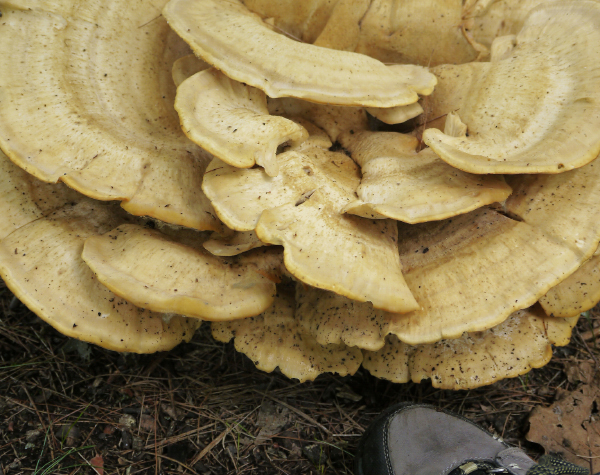
Bondarzewia berkeleyi
This is a true giant (note my boot in the bottom right corner of the photo). It can form clumps that are three feet wide or more, and feeds on living and dead hardwood trees. Its namesake, Miles Joseph Berkeley, was a 19th century British clergyman who was very important to the early study of fungi.
Fairy stool
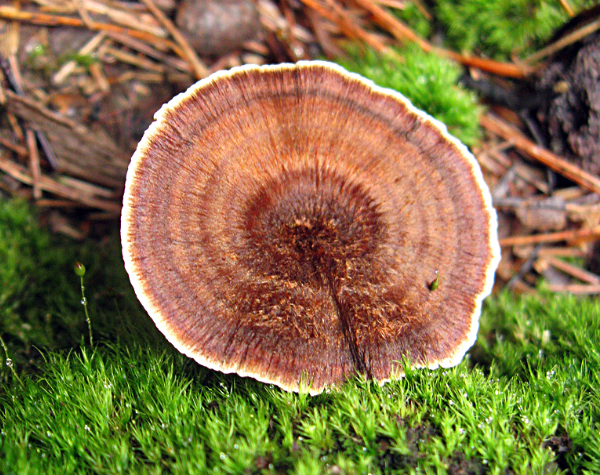
Coltricia cinnamomea
This velvety, vase-shaped mushroom looks like it would make a comfortable seat for a tiny woodland creature. It’s usually less than two inches wide. Look for the fairy stool in mossy areas beside paths, where it feeds on underground tree roots and wood.
Looking to learn more? Take a fungi walk with us!