Like us, many animals put on a new set of “clothes” during the colder months. Here are five local creatures that sport different looks in summer and winter.
American Goldfinch Spinus tristis
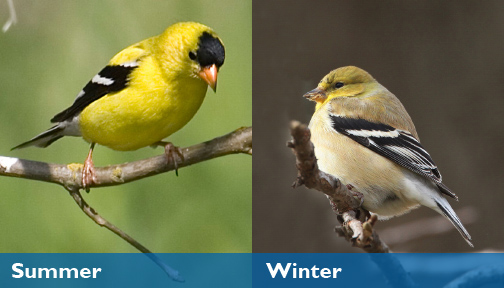
When the weather grows cold, people inevitably start asking about all those drab yellow-gray birds that are visiting their feeders. They’ve just discovered the American goldfinch’s secret identity. In autumn the male loses his black forehead and most of his striking yellow color, and the female becomes browner. In both sexes the bill turns from pink to gray. As winter progresses, you’ll see hints of that bright plumage coming back.
© David Parrish (left), © Manjith Kainickara, Flickr user manjithkaini (right)
Red Squirrel Tamiasciurus hudsonicus
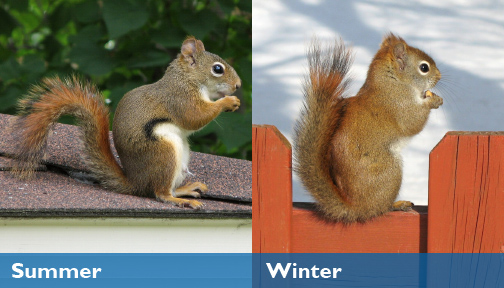
Shrewd bird feeder watchers will notice seasonal differences in the appearance of this familiar visitor. In summer the red squirrel has dark stripes down its sides, but in winter these features fade and it develops a rich red line down its back. The color changes accompany a new thicker coat of fur that includes long ear tufts.
Gilles Gonthier from Flickr (both images)
Common Loon Gavia immer
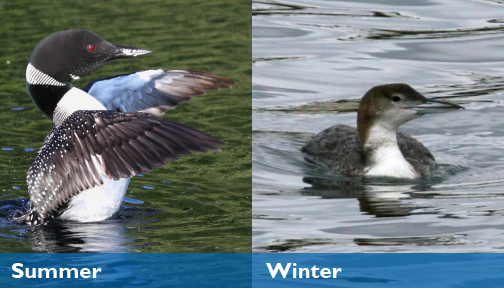
At the end of the summer breeding season the loon begins a dramatic transformation. It loses the familiar black and white checker-spot pattern and becomes almost unrecognizable in drab grey-white plumage. Also, it leaves its picturesque lake habitat and heads for the sea. It tends to stick close to land, and you can often see a loon—hiding in plain sight—if you visit the coast in winter.
© Michael Phillips (left), © Bruce DeGraaf (right)
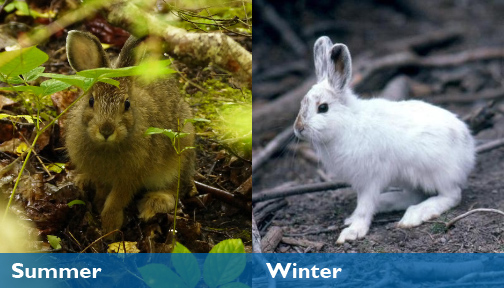
Snowshoe Hare Lepus americanus
Unlike the more common cottontail rabbit, which is always brown, the snowshoe hare turns white in the winter. It prefers colder spruce-fir forests, and its winter outfit of thick white insulating hairs keeps it warm and hidden from predators. This wardrobe shift is triggered by the length of the day. Unfortunately, if there’s not enough snow, the hare really stands out against the brown terrain, which has scientists worried about this species’ future as the climate changes.
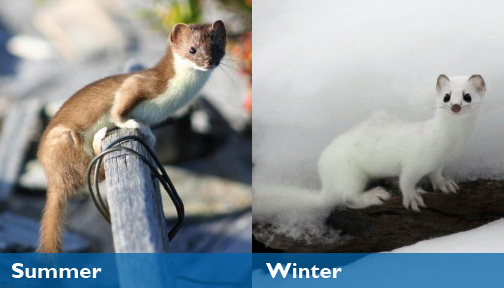
Short-tailed Weasel Mustela erminea
You may know this animal by the names “stoat” or “ermine”. It has a long, thin body and a black tail tip. In the fall it sheds its brown summer coat and gains a thick, soft white one. This helps it blend into the snowy landscape, keeping it hidden from predators such as hawks and owls while it stalks small rodents and rabbits.
Flickr user bgblogging (left)
These are just a few of the many animals that have a different winter look. What other changes have you noticed?