
Long before the trees leaf out and baby songbirds hatch, you can look for these early signs that a new season is finally arriving.
Chickadees Singing their Spring Song
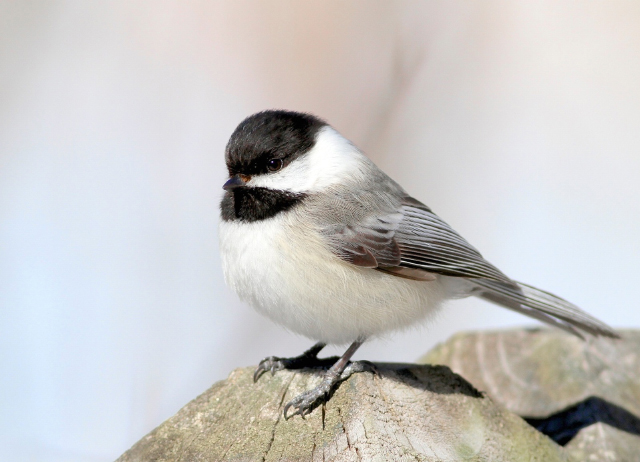
In late winter, male black-capped chickadees (and sometimes females) begin to make their short two-note song. To some, it sounds like “cheese-burger” or “my tree!”. Usually the second note has a lower pitch—but the song varies. For example, researchers have found that chickadees on Martha’s Vineyard and Nantucket tend to sing two notes with the same pitch. As spring draws nearer and chickadees pair off, you’ll hear this song more and more frequently.
Skunk Cabbages Blooming
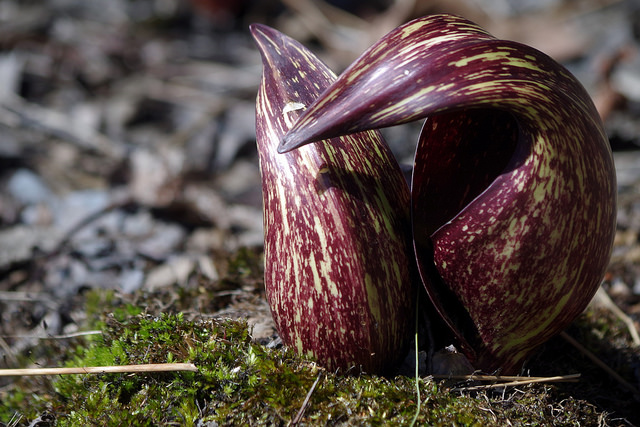
The earliest flower to bloom in Massachusetts is also one of the most unusual-looking. Related to the peace lily, a popular indoor plant, the skunk cabbage can flower as early as February. Incredibly, its tissues are capable of generating heat, which can melt the snow and ice around it. Look for it in wetland areas. You’ll see a curving hood-like structure (the spathe) surrounding the round flower-bearing spadix; later, big bright green leaves will emerge.
Mourning Cloak Butterflies Flying
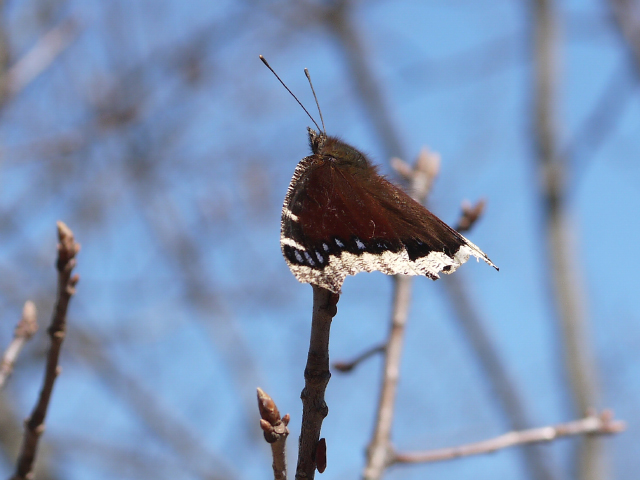
Observers are already noting sightings of this butterfly fluttering through the bare forest. It overwinters as an adult, perhaps in a tree cavity or under bark. Generally, males will choose a perch from which to watch for females—and keep an eye on any interloping males that they may need to chase away.
Wood Frogs Quacking
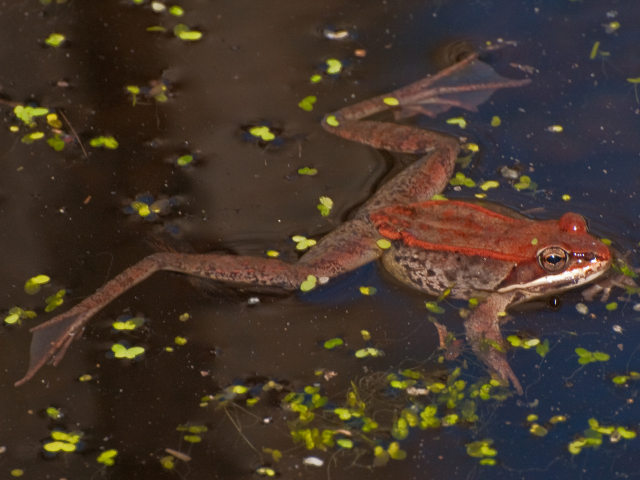
These amphibians are remarkably cold tolerant. They survive the winter in soil or leaf litter, freezing and thawing repeatedly without damage thanks to antifreeze-like chemicals. Often while there’s still ice on the ground, wood frogs emerge in March and April to lay their eggs in special temporary forest ponds called vernal pools. Males make a duck-like courship call. Here’s a video of wood frogs calling from a pond in early April 2014 at Drumlin Farm in Lincoln:
Have you noticed any heartening signs of spring? Let us know!