When four great horned owl chicks and their nest blew out of their tree near Blue Hills Trailside Museum in Milton due to high winds in early May, the team at Trailside knew exactly what to do. Trailside has successfully placed 3,000 baby hawks and owls into foster nests over the past 30 years.
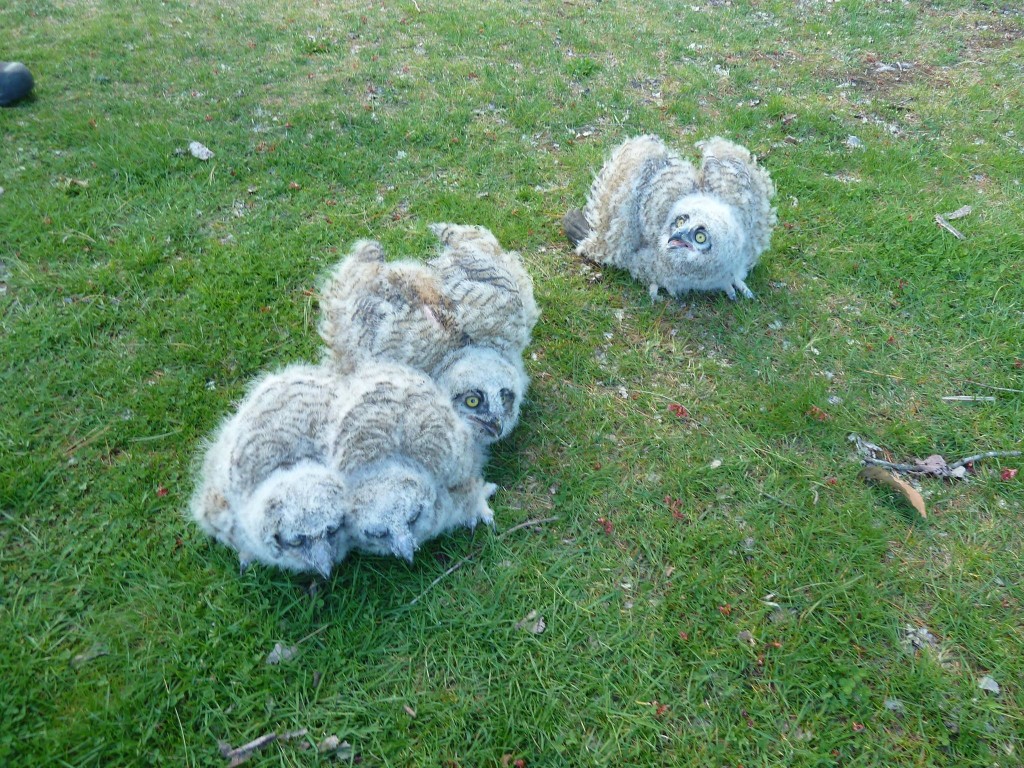
Photo by Dan Burton
In many cases they would attempt to put the chicks back in the original nest if it is in good condition. If the nest is in bad condition, or blown down with the chicks as in this scenario, a new, sturdier artificial nest is required.
The new nest structure was placed in an adjacent tree that the parent owls readily accepted. After putting up the new nest and returning the baby owls to it, Trailside staff sprayed ammonia around the base of the tree to ward off any predators. The ammonia masks the smell of people.
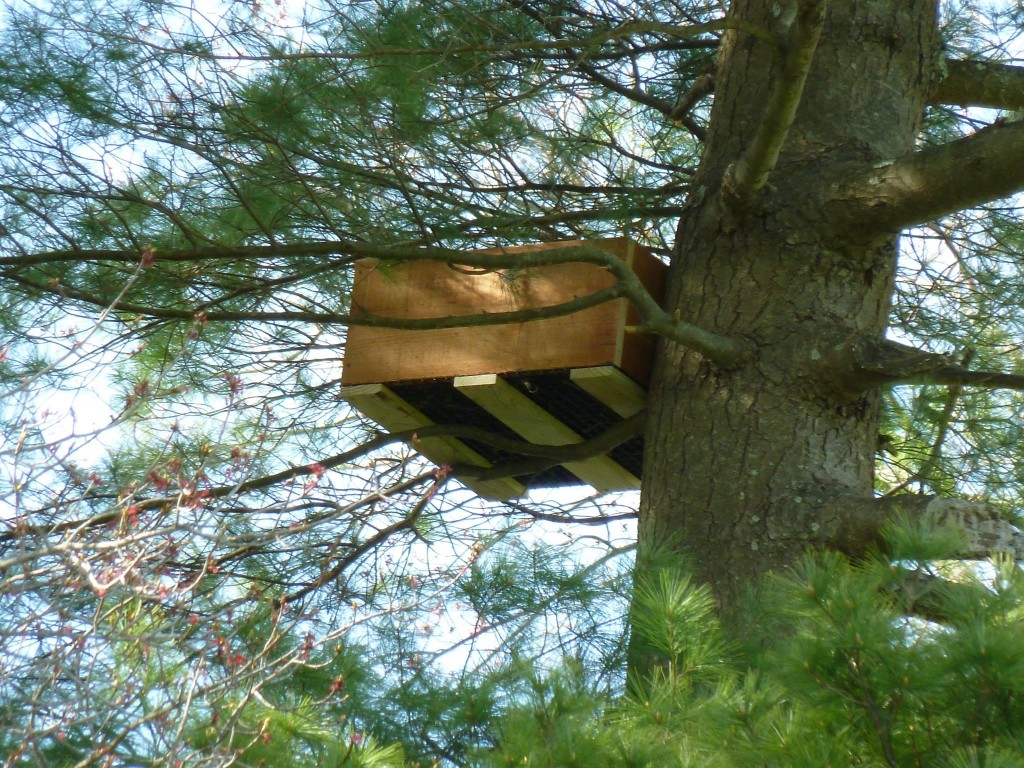
Photo by Dan Burton
Unfortunately, this scenario is not that uncommon. Owls do not build their own nest; they use whatever is available whether it is an old hawk, crow, or even squirrel nest. Often these nests are in poor condition. Strong winds often lead to chicks ending up on the ground before they fledge. This can make them susceptible to predators like coyotes, raccoons, or fishers.
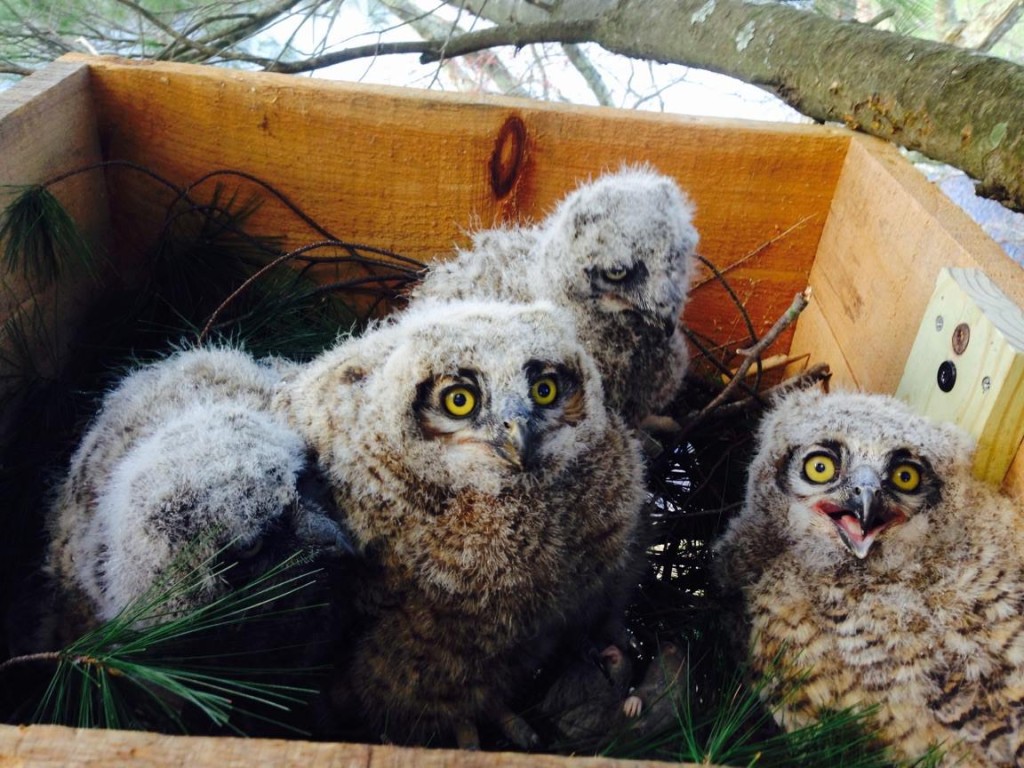
Photo by Dan Burton
It’s important to note that not all baby birds on the ground are in need of help. In fact, many birds that people try to rescue are still being cared for by their parents and should be left alone. If you happen to come across a baby bird, check out our Baby Birds Out of Nest Guide to find out when action is needed, and when it isn’t.
Happy endings like this one could not happen if it wasn’t for the generous support of people like you. Help contribute to more happy endings today!
Thanks to Trailside Director Norman Smith and Trailside’s Education Coordinator/Camp Director Emma Snellings for sharing this great story!