
We recently received this letter from a Colleen Kiely, a young Mass Audubon member from Western Massachusetts. Colleen spent her summer at the Cape Cod National Seashore teaching visitors about piping plover conservation as part of her Girl Scouts Gold Scout Award Project. We were so inspired by her story that we wanted to share it far and wide.
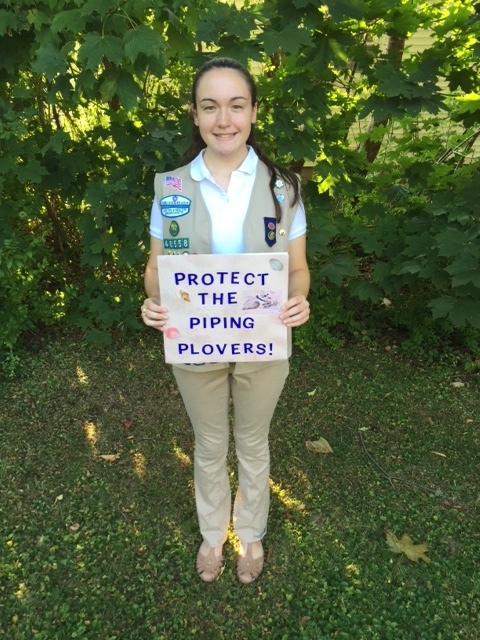
Colleen Kiely
My name is Colleen Kiely and I am a senior at Wahconah Regional High School in Berkshire County Massachusetts. My father and I have been members of Mass Audubon for 10 years and enjoy birdwatching and hiking at Pleasant Valley and Canoe Meadows, two beautiful sanctuaries in the Berkshires. Our experiences with Mass Audubon have inspired me to become an environmental activist and protect endangered birds and their habitats.
I have been a Girl Scout for seven years and this year, as an Ambassador Girl Scout, I am completing my Girl Scout Gold Award Project. Last year I volunteered at the Cape Cod National Seashore, teaching vacationers about the protected birds with a Shorebird Exhibit. For my project, “Protecting the Piping Plovers,” I talked to over five hundred vacationers this year at the National Seashore about the shorebird’s conditions, how climate change is affecting the birds, and what they can do to help the Piping Plovers.
Prior to my work on the Cape, I researched the Piping Plovers endangered species status as well as made a new Piping Plover bird model, and included a coloring page for kids, for the Shorebird Exhibit. I also continued my research on the birds throughout the summer to stay up to date on how the shorebirds are doing this year. Through writing this letter, my hope is to spread awareness of the Piping Plovers and encourage others to take action in protecting the birds.
The ways in which you can help include:
- staying out of all marked off areas of the beach
- keeping your pets on a leash
- throwing away all trash
Thank you,
Colleen Kiely
You can learn more about Mass Audubon’s work to protect piping plovers through our Coastal Waterbird Program.