Category Archives: Uncategorized

Whose Name Shapes a Place? Franklin Park, Elma Lewis, and the Power of Place Names

Tami Gordon, Nature in the City Fellow
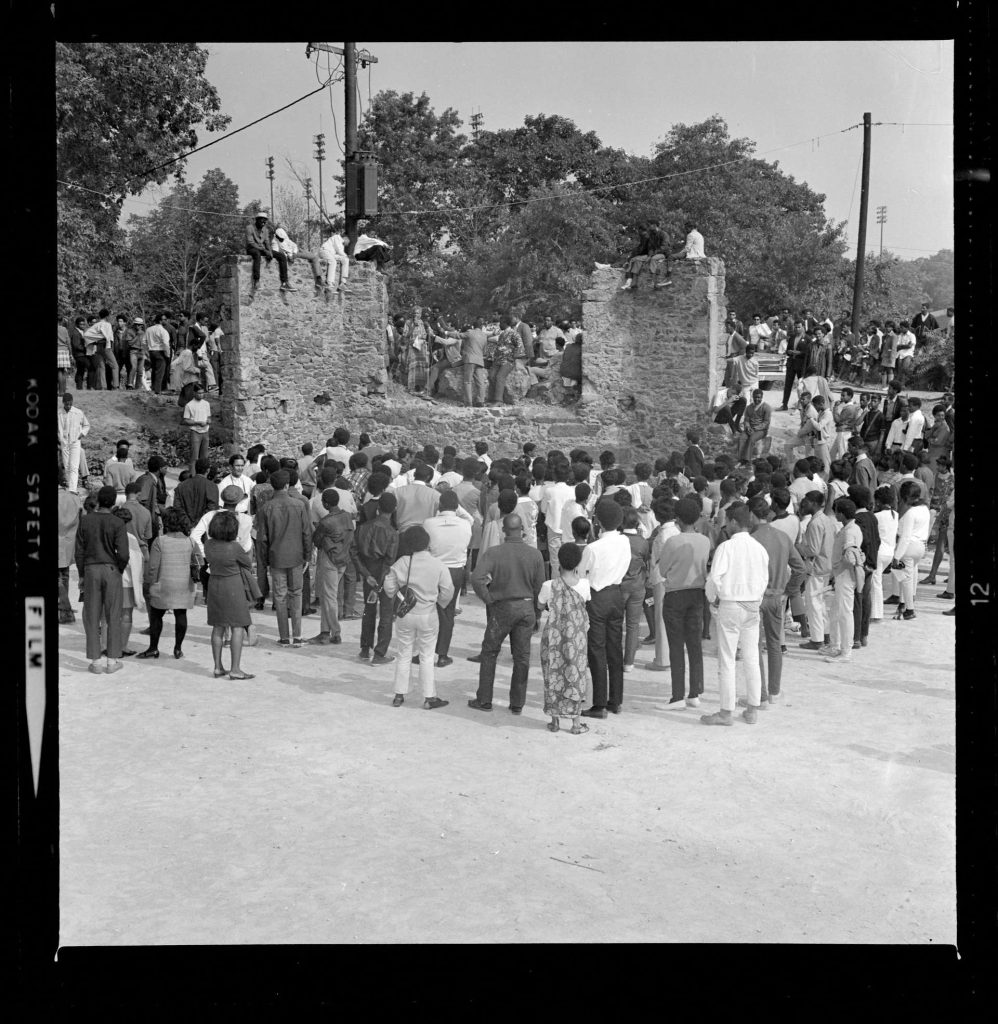
Group of people at Elma Lewis Playhouse at rally in Franklin Park, 1968 via Boston Public Library

Boston’s Franklin Park is not only a site for recreation—it is also a space where competing narratives of history, identity, and belonging unfold. As the largest park in the Emerald Necklace Park System, the park hosts an array of wooded trails, open meadows, recreational fields, and the Franklin Park Zoo, offering a range of experiences that connect residents to nature within an urban environment.  

My professional project focuses on how Afro-Caribbean immigrant communities experience outdoor spaces and build a sense of belonging and meaning within their neighborhood. Building on Nature in the City’s goal of increasing access to nature, I have come to see that physical proximity to green space is not enough; access must also be cultural, relational, and grounded in community representation. My own experience in Franklin Park helped bring this research into focus. 

Before moving to Boston, I spent every summer with my family in the Bronx, where our neighbors, storekeepers, churches, and rhythms were intrinsically Caribbean. I understand my Caribbean heritage as an essential part of my Black diasporic identity, yet Boston’s perceived lack of a distinct Afro-Caribbean cultural presence often made that part of me feel isolated and flattened—reduced to race alone.   

That changed when I unexpectedly encountered Boston’s Trinidad-Style Carnival parade along Franklin Park.  

I saw paradegoers exchanging beaded bracelets, singing and dancing to familiar riddims under the proudly displayed Caribbean flags that stretch down the avenue for miles—symbols that grounded my international heritage within a place I had once assumed lacked Black and Caribbean presence. Events like Carnival, along with informal gatherings, cookouts, and community programming position Franklin Park as more than just a green space—it is a site for cultural continuity and identity-making. My work on this project has also illuminated the importance of local stewardship and intentional cultural representation of the communities that green spaces are a part of.  

While researching Caribbean community leaders, I repeatedly encountered the name Elma Lewis. When I later saw her connection to Franklin Park and the important role that she played in reviving Franklin Park as a point of pride for the community, I was upset by the absence of a prominent, permanent physical marker honoring her legacy within the park itself as a Caribbean-American and a Bostonian.   

In the 1960’s, Miss Lewis led a massive cleanup campaign to restore Franklin Park, which had suffered from neglect, rats, garbage, and drug paraphernalia.  

After its restoration, Miss Lewis created the Elma Lewis Playhouse-in-the-Park, which brought free, nightly performances to Franklin Park. These programs fostered some of Boston’s largest and most meaningful cultural gatherings and featured some of Boston’s greatest performers, including Duke Ellington and Odetta. The Playhouse is a vital cultural institution in Boston, and Miss Lewis’ legacy of access to nature, cultural pride, and creative expression is carried forward by the Franklin Park Coalition.   

Franklin Park was once a heavily neglected area of Boston, and without Miss Lewis’ vision and relationship to the space, we would not have the Playhouse concert series and a welcoming park to gather outdoors with our loved ones. As the City of Boston changes over time, future leaders must recognize and honor the lasting traces of earlier times to be equitable.  


Tami Gordon (they/them/theirs) is the Nature in the City Fellow for Cohort 4 (2025-2026). Tami works with the Nature in the City program staff and provides support to both the Boston Tree Alliance and Broadmeadow Brook. A recent graduate from Boston University’s Earth and Environmental Sciences program, Tami has been a lover of the environment since they were a child growing up with the stories of their Jamaican and Trinidadian household. When they’re not at work, you can find them making music, birding, or writing. 

Image Source: Group of people at Elma Lewis Playhouse at rally in Franklin Park [Photograph]. (1968, September 25). Retrieved from https://ark.digitalcommonwealth.org/ark:/50959/rb68zd10q
“What will you do when we win?” 

By Hannah McGrath, Advocacy Campaign Fellow

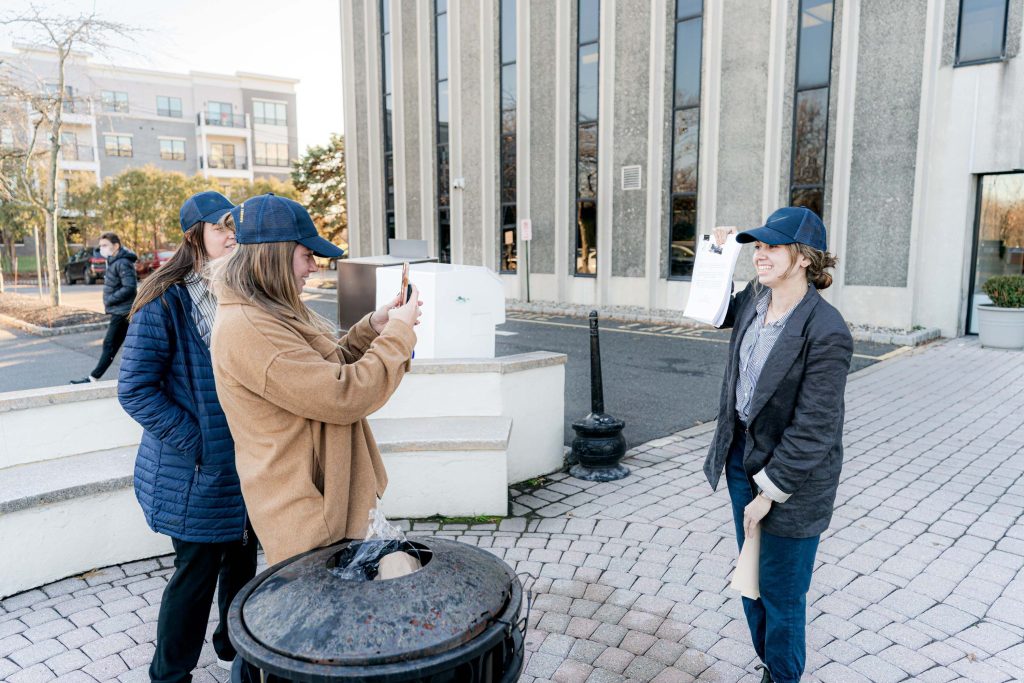
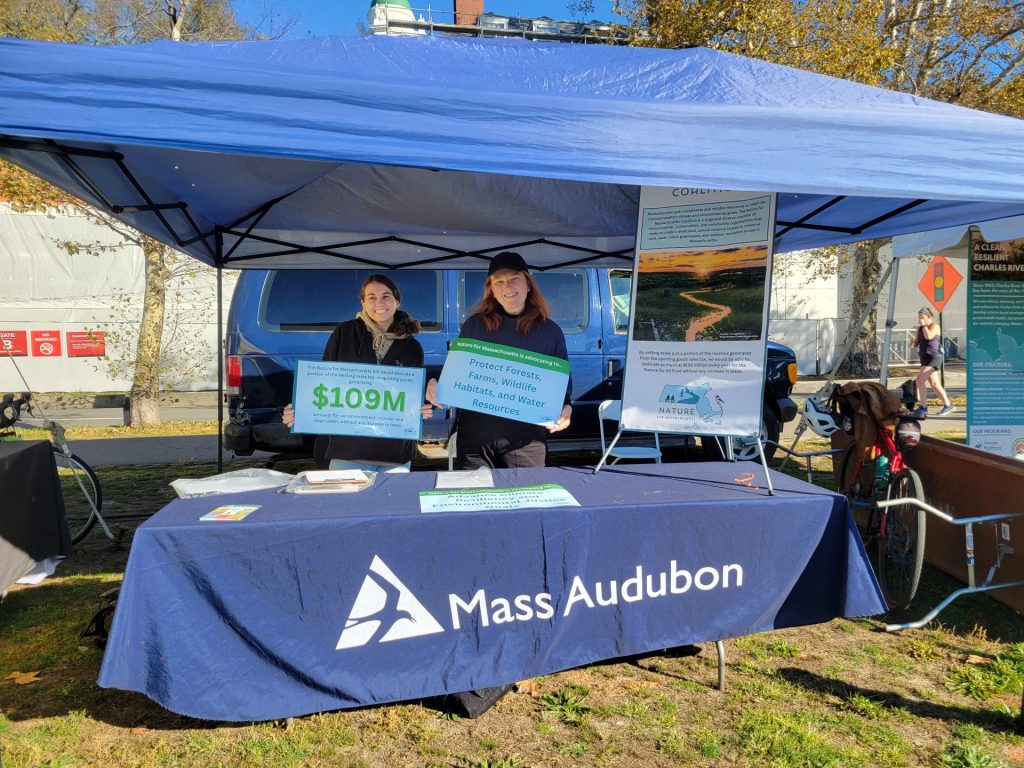
Hannah McGrath left, with Katharine Lange of the Conservation Law Foundation, tabling for the Nature for Massachusetts coalition.

“What will you do when we win?”

That was the question that kicked off the Nature for Massachusetts coalition 2026 planning session, and it stuck with me. Not because I had a profound answer, but because it revealed how policy work can feel both far away and suddenly near. The campaign’s outcome, to dedicate $100 million annually for improving access and protecting nature, could come in November. It seems far off on a calendar, but the amount of work ahead and the pace we need to move at makes it feel like it is rushing toward us.

As my fellowship with the Policy and Advocacy team is progressing, I am gaining a deeper understanding of what makes a policy win possible and why the work moves both slowly and quickly.

Some parts need to happen in a flash: drafting testimony on short timelines, preparing social media language, mobilizing volunteers to act, and responding to breaking policy developments.

Other parts unfold slowly to build a strong foundation for successful policy work: researching potential solar sites, defining our strategy, creating fact sheets on the climate literacy bill our youth programs focus on, and helping coordinate volunteer efforts ahead of the short signature collection period for the Nature for Massachusetts ballot campaign.

Somewhere in the middle of all the fast and slow work, I am developing a clearer sense of what’s needed for a win that benefits everyone. Since this fellowship is based in Mass Audubon’s Diversity and Inclusion department, I’m learning that good, long-lasting policy is shaped by who is at the table and how we work together toward a shared goal. That means asking who’s missing from the room, why, and how we can listen and create space for the voices that are missing, even as the work accelerates. I feel lucky to be working with people across our teams and coalitions who think about that too.

Looking back on that planning session, I still don’t know what I will do when we win. But I understand what it takes to get there, pairing urgency while building a strong base.

You can be part of this work by helping us collect signatures in May to get Nature for Massachusetts on the ballot.


Hannah McGrath (she/her) grew up in New Hampshire and got her start in environmental policy as a canvasser in Vermont. She earned her B.A from Hobart and William Smith Colleges as a double major in environmental studies and geoscience, and minored in public policy. She was also a student athlete on the field hockey team and conducted research microplastics in the atmosphere.

Before Mass Audubon, Hannah was an environmental organizer, where she led multiple environmental campaigns. During this time, she was a part of efforts to advocate for renewable energy, expand marine protected areas and ban plastic bags in California by collecting over 11,000 signatures.

Climate Education as Resistance 

By Scarlett Gonzalez, Climate Education Fellow 

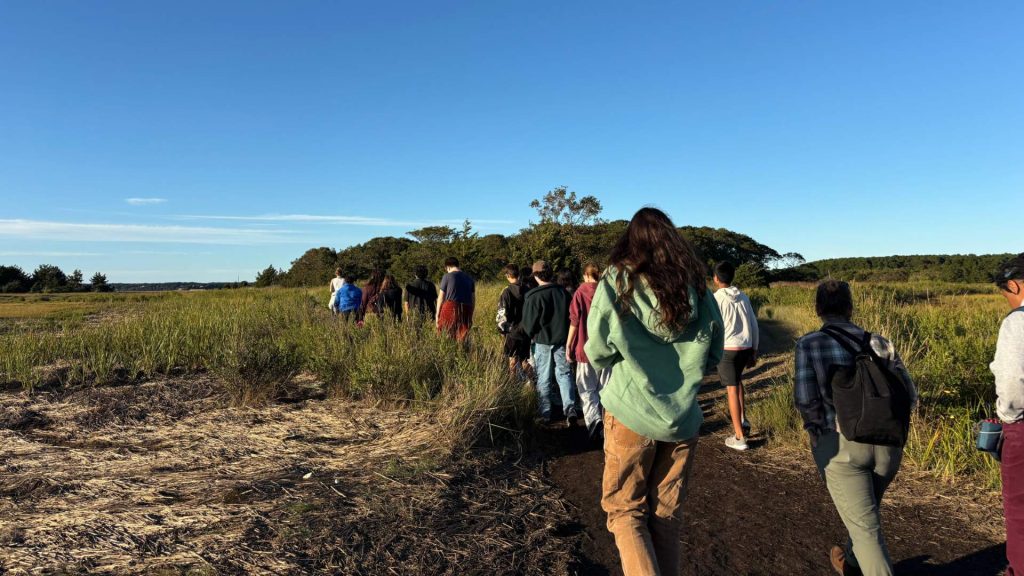
Youth Climate Leadership teens at Wellfleet Bay in September. Photo by Scarlett Gonzalez.

Last October, the West Youth Climate Leadership Program (YCLP) hosted their annual Youth Climate Summit. YCLP is a Mass Audubon program dedicated to providing youth with the resources and training to combat climate change on a local scale. The West team’s summit is a large regional conference aimed at providing valuable networks and training for youth to launch a local climate project. The overarching theme of the summit was “Resilience as Resistance,” and I was asked to lead a workshop about education as resistance.

As I prepared, it became clear to me that education has historically been used as a form of control in the United States. Laws prohibited enslaved people from learning to read and write, and even after emancipation, segregation and underfunded schools limited educational opportunities for students of color. Until the twentieth century, institutions also excluded white women from formal education, barring them from most colleges and discouraging academic study beyond what society deemed “useful” or “appropriate.” Federal boarding schools removed Indigenous children from their families and communities and punished them for speaking their Native languages or practicing their cultures. For much of U.S. history, those in power used education as a tool of oppression and assimilation.

Today, as books are removed from library shelves, education funding is drastically restricted, and entire curriculums are canned, I’m reminded that what is considered “acceptable” knowledge is constantly being redefined by those in power.

Climate education is no exception. Many classrooms across the state see climate change and climate justice as too controversial to teach. And when schools do teach it, they often narrow solutions to individual behavior change – plant a tree, ride a bike, recycle more. Those actions matter, but they also keep attention away from institutions, policies, and systems.

When we teach young people about climate change, we give them something incredibly important: time. Time to challenge what people have accepted as “feasible,” time to imagine new and creative solutions, and time to think and act institutionally.

All of this was apparent at the summit. High school students were already knowledgeable about environmental justice concepts and community engagement tools that I learned in college. They weren’t asking what can be done; they were asking how to strategically get their solution implemented.

And they were ambitious. They didn’t stop at the implementation of cafeteria composting programs; they were sharing tools and resources to convince school board members to prioritize switching from gas to electric stoves in the cafeteria.

Through my work as Mass Audubon’s Climate Education Fellow, I get to guide youth climate leaders through the state’s political system as they advocate for the Climate Literacy Education Bill. The work is slow and full of meetings, coalition‑wrangling, and endless emails—and continues to be deeply fulfilling to work alongside teachers, union leaders, and students throughout the process.

When we teach, when we learn, and when we insist on access to knowledge, we practice resistance. Despite the daily flood of alarming headlines, these are precedented times. And personally, I find comfort in the fact that we’ve faced these lessons before.


Scarlett Gonzalez (she/her) is from rural Indiana, where her interest in environmental justice began through learning how the animal agriculture industry and labor rights intersect with environmentalism. In 2023, she earned a Bachelor of Arts in Public Policy and Environmental Studies from New York University.  

In college, Scarlett successfully encouraged her university to fully divest from fossil fuels as a member of the Sunrise Movement NYU chapter. She then worked with Rep. Raúl Grijalva and the House Natural Resources Committee as a Congressional Hispanic Caucus Institute Public Policy Fellow. 

In her free time, Scarlett enjoys kayaking, journaling, and visiting new coffee shops. 

Decisions that Create our Future: Policy Work at Mass Audubon  

By Hannah McGrath, Advocacy Campaign Fellow

Hannah McGrath (right) during her work as an organizer for an environmental campaign in winter of 2023. 

So far, my 20s has meant making a lot of decisions. I’ve seen how choices like what classes to take, which jobs to apply to, or even what to eat for breakfast can ripple outward in unexpected ways.

During a summer in college, I decided to go grocery shopping with some new friends and one of them mentioned that they were working as a canvasser for an environmental non-profit. They asked if I needed a job. I did, and accepting that offer set me on a path of environmental policy that has lasted to this day.  

For that first job, I was a part of a group that canvassed for a plastic pollution bill in Vermont. I biked up long, dirt driveways in Tevas and a sweat-stained shirt and asked strangers if they wanted to give money to a random girl whose passion for environmental policy bordered on overwhelming. I watched people weigh resources, values and urgency about whether or not to give in those moments. 

Since June, I’ve been working as Mass Audubon’s Advocacy Campaign Fellow and witnessing a different caliber of decision making than I did in those early canvassing days. The decisions here last much longer than a few seconds and are far more strategic and collaborative. 

Recently, much of my work has revolved around supporting Mass Audubon’s participation in the Nature for Massachusetts coalition. Together with over 80 other organizations from across the state, we are working to secure statewide funding for increasing access for nature and protecting water and land. I didn’t realize how much thought went into something like this until I saw the decision-making process unfold myself.

One moment that stands out was earlier this summer, when I and the other Environmental Fellows met with the Mass Audubon leadership team at a welcome lunch. At the end of the lunch, we began to talk about Nature for Massachusetts, and were asked about our thoughts on the pros and cons of the coalition proceeding with a tactic to take the measure to the 2026 ballot. The process for getting a question on the ballot takes a lot of hard work – the coalition needs to collect over 100,000 signatures from voters, which demands a real commitment of resources.  

For the first time, I saw my peers contributing to these decisions. Our thoughts and opinions mattered here.  We weighed in, considering the payoff versus the effort, and talked through what else was needed to support the decision-making process. 

Through this fellowship, I’m imagining the future I want to create, and the kind of decisions that can help build it. Whether it’s choosing what to apply for, what campaign to focus resources on, or how to show up in a room full of leaders, I’m learning that every choice carries weight, even if I can’t see the outcome in front of me. Getting to be a part of campaigns that protect nature and people has shown me that this work isn’t passive. It’s something we choose, again and again. 


Hannah McGrath (she/her) grew up in New Hampshire and got her start in environmental policy as a canvasser in Vermont. She earned her B.A from Hobart and William Smith Colleges as a double major in environmental studies and geoscience, and minored in public policy. She was also a student athlete on the field hockey team and conducted research microplastics in the atmosphere.   

Before Mass Audubon, Hannah was an environmental organizer, where she led multiple environmental campaigns. During this time, she was a part of efforts to advocate for renewable energy, expand marine protected areas and ban plastic bags in California by collecting over 11,000 signatures.