
By Jessie Traxler, Land Conservation Fellow
As a recent graduate, it’s pretty common for people to ask me what I studied in school. What’s also become common is their surprise as they try to piece together how I graduated in May with a major in Political Economy but ended up as the Land Conservation Fellow at Mass Audubon. I was initially drawn to the fellowship because it was an opportunity for me to learn about a completely new career path in the environmental field and to use some of the ArcGIS skills I learned in class. However, as someone who spent 5 semesters as a teacher’s assistant for an introductory microeconomics course, I would be the first to tell you that I soon discovered how “economics is everywhere.”
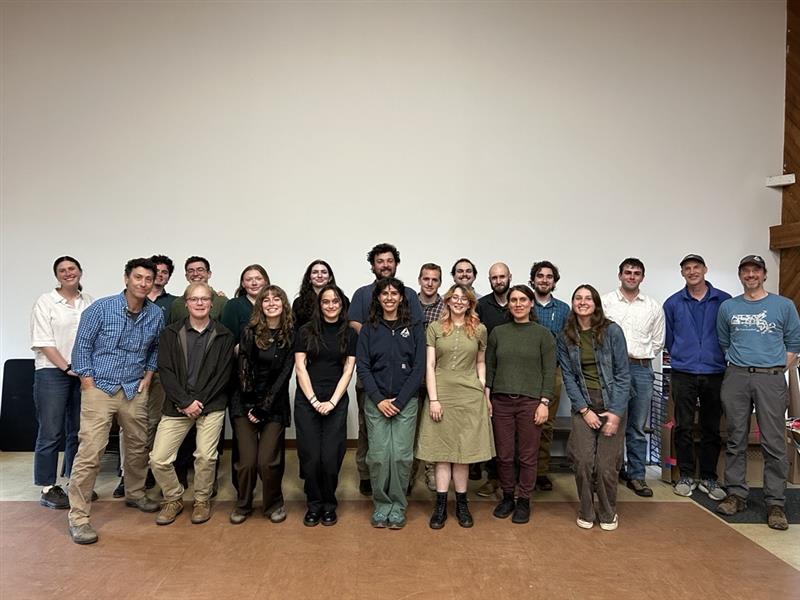
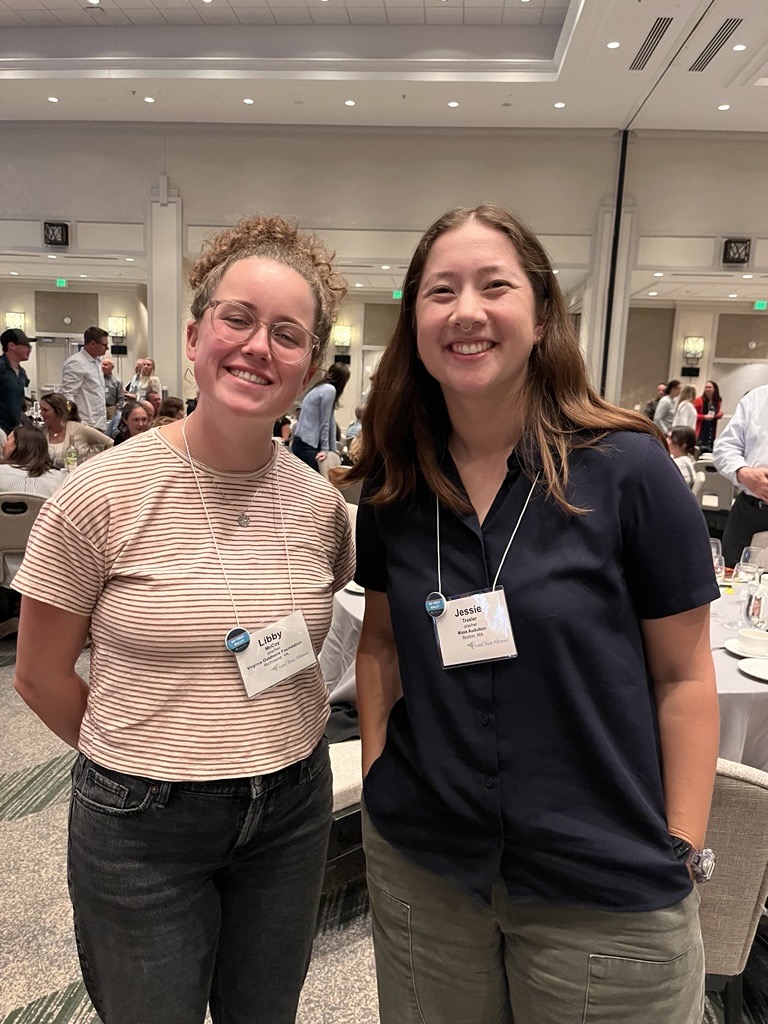
Many of these connections arose at Rally, the Land Trust Alliance’s annual Land Conservation Conference. Rally is an annual opportunity for employees, board members, and anyone involved with the work of land trusts to network and exchange ideas. People came from across the country to Denver to discuss land conservation projects and strategies, and as a fellow, it was a great opportunity for me to meet new people and learn through different sessions what this work looks like at a variety of organizations.
One session I attended focused on land conservation tax credits. One of the projects I have worked on as a fellow has been completing a landowner’s application for the Massachusetts tax credit program, so I was excited to attend this session to learn more about how this tool is structured in other states. These tax credit programs exist to compensate landowners for the value of the land that they are permanently protecting, by donating it to a land trust.
Something I found interesting about this conversation was that it focused specifically on transferrable credits, which means that landowners can sell the credit to interested parties through a broker, instead of putting the credit towards paying off their own taxes. The transferable credit is a more equitable option for low-income landowners because they can receive the full monetary value of the credit in cash through the broker.
However, this transferability got me thinking about some of the wider implications of transferring tax credits, namely who is receiving these write-offs. The short answer tends to be those who owe a lot of money in taxes, which are often corporations; the session helped me think critically about this mechanism, and how different market-based solutions can both encourage more investment in conservation and simultaneously benefit companies that do harm.
Economics showed up in other ways during Rally, too. For example, the Friday morning talk focused on how conserving stretches of land can exponentially positively impact ecosystem health. The talk described how conserving contiguous land is worth more than the sum of its parts. For example, protecting 100 acres of contiguous land has more benefits than 4 parcels of 25 acres, even though the same total acreage is protected. Focusing on these contiguous projects leads to more effective ecosystem services—the benefits that humans get from ecosystems—in these protected habitats.
After listening to this talk, I had a stronger understanding of why Mass Audubon’s Land Conservation team considers connectivity with other conserved lands when evaluating potential land projects. I also better understood how one could use connectivity to argue for a higher appraised value for a land project because of its more effective ecosystem services.
Since the start of my fellowship, I’ve begun to see much more concrete connections between what I studied in school, and the conservation work I do now. Rally helped draw some of these connections for me, and I’m excited to use the knowledge I gained to continue to support applications to Massachusetts’ Land Conservation Tax Credit program and to better articulate the economic case for protecting nature.
Jessie Traxler (she/her) is originally from Massachusetts. She recently graduated from Georgetown University, where she majored in Political Economy and minored in Environmental Studies and Chinese. She is passionate about increasing access to the outdoors, especially for youth and historically marginalized communities. When she’s not out on the trail, Jessie enjoys playing ultimate frisbee and refereeing youth soccer.