
By Scarlett Gonzalez, Climate Education Fellow
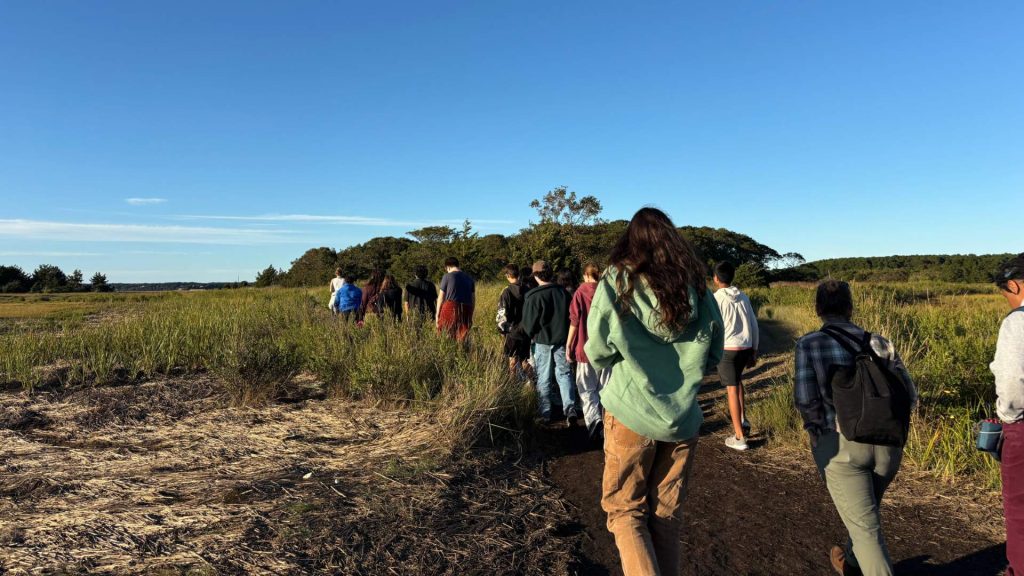
Last October, the West Youth Climate Leadership Program (YCLP) hosted their annual Youth Climate Summit. YCLP is a Mass Audubon program dedicated to providing youth with the resources and training to combat climate change on a local scale. The West team’s summit is a large regional conference aimed at providing valuable networks and training for youth to launch a local climate project. The overarching theme of the summit was “Resilience as Resistance,” and I was asked to lead a workshop about education as resistance.
As I prepared, it became clear to me that education has historically been used as a form of control in the United States. Laws prohibited enslaved people from learning to read and write, and even after emancipation, segregation and underfunded schools limited educational opportunities for students of color. Until the twentieth century, institutions also excluded white women from formal education, barring them from most colleges and discouraging academic study beyond what society deemed “useful” or “appropriate.” Federal boarding schools removed Indigenous children from their families and communities and punished them for speaking their Native languages or practicing their cultures. For much of U.S. history, those in power used education as a tool of oppression and assimilation.
Today, as books are removed from library shelves, education funding is drastically restricted, and entire curriculums are canned, I’m reminded that what is considered “acceptable” knowledge is constantly being redefined by those in power.
Climate education is no exception. Many classrooms across the state see climate change and climate justice as too controversial to teach. And when schools do teach it, they often narrow solutions to individual behavior change – plant a tree, ride a bike, recycle more. Those actions matter, but they also keep attention away from institutions, policies, and systems.
When we teach young people about climate change, we give them something incredibly important: time. Time to challenge what people have accepted as “feasible,” time to imagine new and creative solutions, and time to think and act institutionally.
All of this was apparent at the summit. High school students were already knowledgeable about environmental justice concepts and community engagement tools that I learned in college. They weren’t asking what can be done; they were asking how to strategically get their solution implemented.
And they were ambitious. They didn’t stop at the implementation of cafeteria composting programs; they were sharing tools and resources to convince school board members to prioritize switching from gas to electric stoves in the cafeteria.
Through my work as Mass Audubon’s Climate Education Fellow, I get to guide youth climate leaders through the state’s political system as they advocate for the Climate Literacy Education Bill. The work is slow and full of meetings, coalition‑wrangling, and endless emails—and continues to be deeply fulfilling to work alongside teachers, union leaders, and students throughout the process.
When we teach, when we learn, and when we insist on access to knowledge, we practice resistance. Despite the daily flood of alarming headlines, these are precedented times. And personally, I find comfort in the fact that we’ve faced these lessons before.
Scarlett Gonzalez (she/her) is from rural Indiana, where her interest in environmental justice began through learning how the animal agriculture industry and labor rights intersect with environmentalism. In 2023, she earned a Bachelor of Arts in Public Policy and Environmental Studies from New York University.
In college, Scarlett successfully encouraged her university to fully divest from fossil fuels as a member of the Sunrise Movement NYU chapter. She then worked with Rep. Raúl Grijalva and the House Natural Resources Committee as a Congressional Hispanic Caucus Institute Public Policy Fellow.
In her free time, Scarlett enjoys kayaking, journaling, and visiting new coffee shops.