

By Isabella Acosta-Jimenez, Land Conservation Fellow
I used to think land protection was simple. At its core, I thought it meant safeguarding forests and wetlands from development. “Protection in perpetuity” sounded abstract until I joined Mass Audubon as this year’s Land Conservation Fellow, and I realized all that goes into it. Due diligence, legal agreements, and partnerships only lay the foundation, but conservation doesn’t end there. It’s a puzzle.
It starts with people like me piecing together the “border” of the bigger land conservation puzzle—playing land detective and searching for opportunities to connect open space, parcel by parcel, story by story. Logistics and an interdisciplinary blend of fundraising, education, conservation science, and more all work in harmony to ensure land remains conserved and stewarded for generations.
One way I do this is through participating in the Nashua Land and Waters Regional Conservation Partnership (RCP)—a powerhouse group of women who meet monthly to talk strategy. This partnership reinforces the idea that conservation is a collaborative and deeply community-based endeavor: conservation cannot happen if people don’t care. We ask: What does the local community want to protect? How do we meet landowners where they are, balancing their expectations while ensuring their land is conserved? And once it’s protected, how does the community want to engage with it?
Through Mass Audubon’s 30×30 Catalyst Fund, seeded by MathWorks, we help smaller land trusts launch projects that reflect these priorities. Mass Audubon brings funding, expertise, and a spirit of collaboration to the table as we support organizations that work with community leaders and landowners to identify and elevate significant conservation opportunities.
Recently, I visited a potential Conservation Restriction (CR) site in Springfield, an urban five-acre parcel that, frankly, was a bit grim: litter everywhere, blankets of invasive plants, spotted lanternflies sucking life out of trees, and signs of abandoned unhoused encampments. For the visit, folks came together from all corners: land protection specialists, the director of Mass Audubon’s Nature in the City program, city officials, and educators from both Mass Audubon and the National Park Service.
Beforehand, I created maps to help us situate ourselves and understand the site’s larger context. As we walked the property and the surrounding area, we began reading the land and imagining its next chapter. What if the site could connect a nearby school to the adjacent protected space, allowing students to walk from their classrooms into greenspace and a restored wetland, where they could learn with and from nature? It’s just five acres, but it’s another puzzle piece—one that helps stitch together fragmented open space in Springfield.
Land conservation often comes down to legal documents, title reviews, and GIS layouts. But it’s also standing in the field, imagining what nature could be and the impact that a relationship with nature could have. This cannot happen without site visits like the one in Springfield, which unite community voices on the ground and carve a path for land protection, management and engagement, once the land is secured.
Conservation means aligning priorities, securing funding, and weaving partnerships to work towards a completed puzzle: finalized land projects. Every deed I review and every site I visit in this role reminds me that conservation is a puzzle—and I’m proud to be part of the team putting the pieces together.
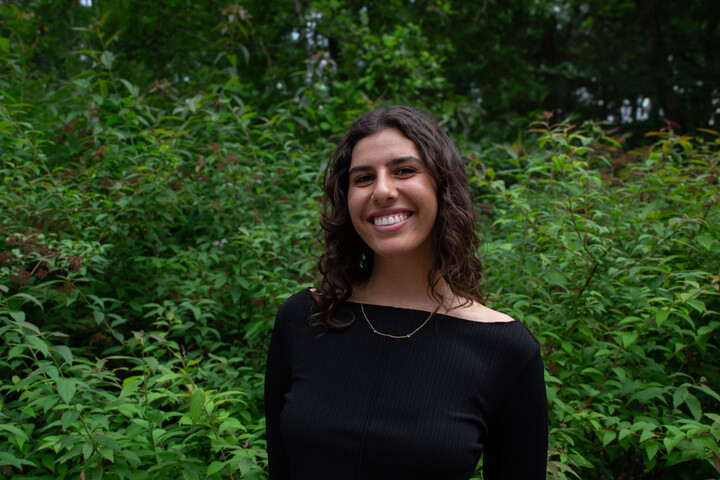
Isabella Acosta-Jimenez (she/her) is originally from New Jersey, where her passion for the outdoors grew from exploring trails and open space. She earned a B.S. in Environmental Studies with honors and a minor in Anthropology from Davidson College in 2024.
In college, Isabella led affinity trips for students of color as part of Davidson Outdoors and completed an honors capstone applying geoarchaeological methods to reconstruct the environmental history of an ancient agricultural site in Cyprus. After graduating, she worked as an au pair in Italy, as an intern at an environmental policy think tank, and as an instructor at the Cathleen Stone Island Outward Bound School. These experiences have shaped her commitment to scientifically grounded, inclusive, and community-driven conservation.
Outside of work, Isabella enjoys reading and exploring new places, near and far.
Thank you for your dedication to inclusive conservation.